Probate Real Estate Investing: Four Strategies and How to Run the Numbers
Probate real estate investing means buying homes from estates, usually from heirs who want a fair, simple sale. This guide covers the main strategies, how to run the numbers, and how to find probate deals before they reach the market.























Hear From Our Customers
Click a profile to watch their video or read their story.






Common probate investing questions from heirs and investors

Four probate investing strategies

How to run the numbers on a probate deal
Start with the after-repair value (ARV): what the home will be worth once updated. Subtract repair costs, holding and closing costs, and your profit. Many flippers use the 70% rule as a starting point: pay no more than 70% of ARV minus repairs.

Where probate deals come from
- New probate cases. Probate leads show estates that include real estate, often months before a listing.
- Pre-probate leads. Recent deaths where probate has not opened yet, for very early, respectful contact.
- Estate attorneys. Attorneys often need a reliable buyer for homes the heirs do not want.
- Agents and estate-sale companies. They see estate homes first and often refer as-is sales.
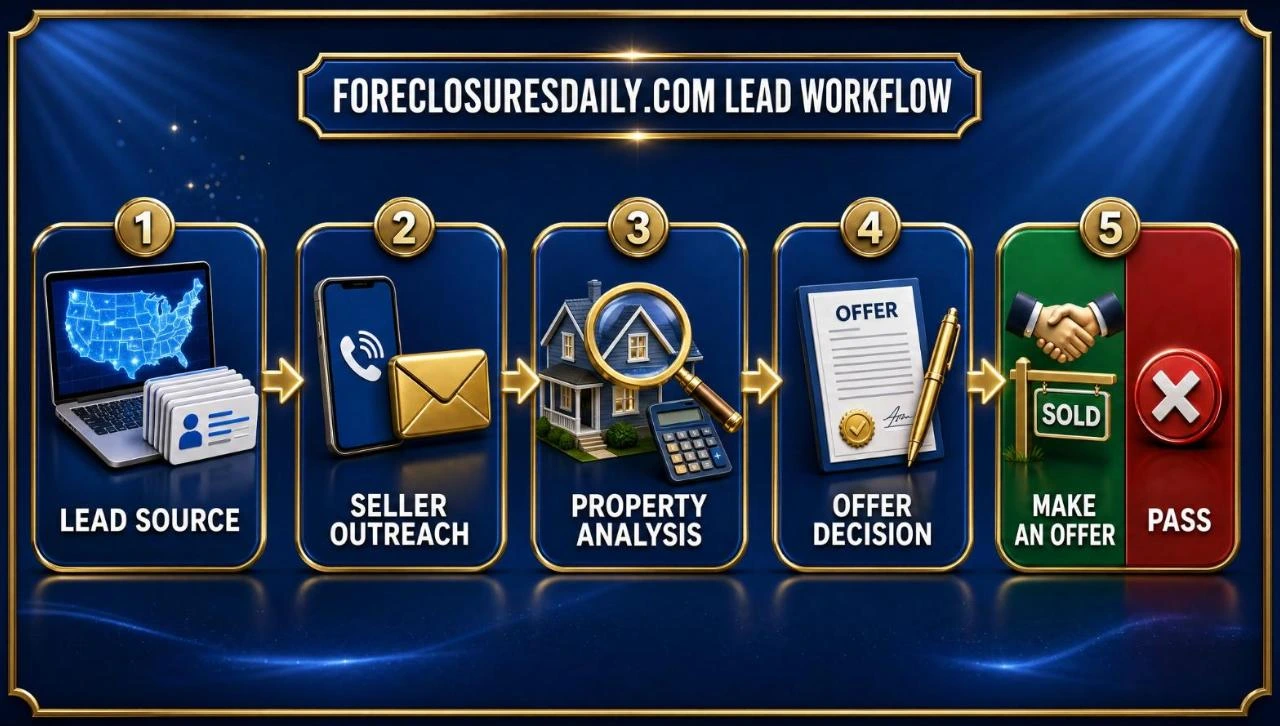
New probate and pre-probate leads are added every day at ForeclosuresDaily.com, which has supplied off-market seller leads since 2004. Browse our probate real estate leads or read the complete probate real estate guide.
Probate real estate investing: FAQ
 Is probate investing ethical?
Do I need court approval to buy a probate home?
 How much can you make on probate deals?
Treat this probate investing guide as general information rather than legal or tax advice. State rules differ, so consult a local attorney about any specific estate.
Find probate deals before they are listed
Get new off-market seller leads, updated daily, for the counties you work.