Wholesaling real estate contracts: purchase agreements, assignments and pitfalls
Wholesaling real estate contracts are the foundation of every wholesale deal. A clear, well-drafted contract protects your interests, sets expectations for the seller and your end buyer, and keeps the transaction moving toward a smooth, profitable closing.
This guide covers why wholesaler contracts matter, the components every agreement needs, how purchase agreements and assignment contracts work together, the legal points to check, negotiation best practices and the mistakes that cost wholesalers money.
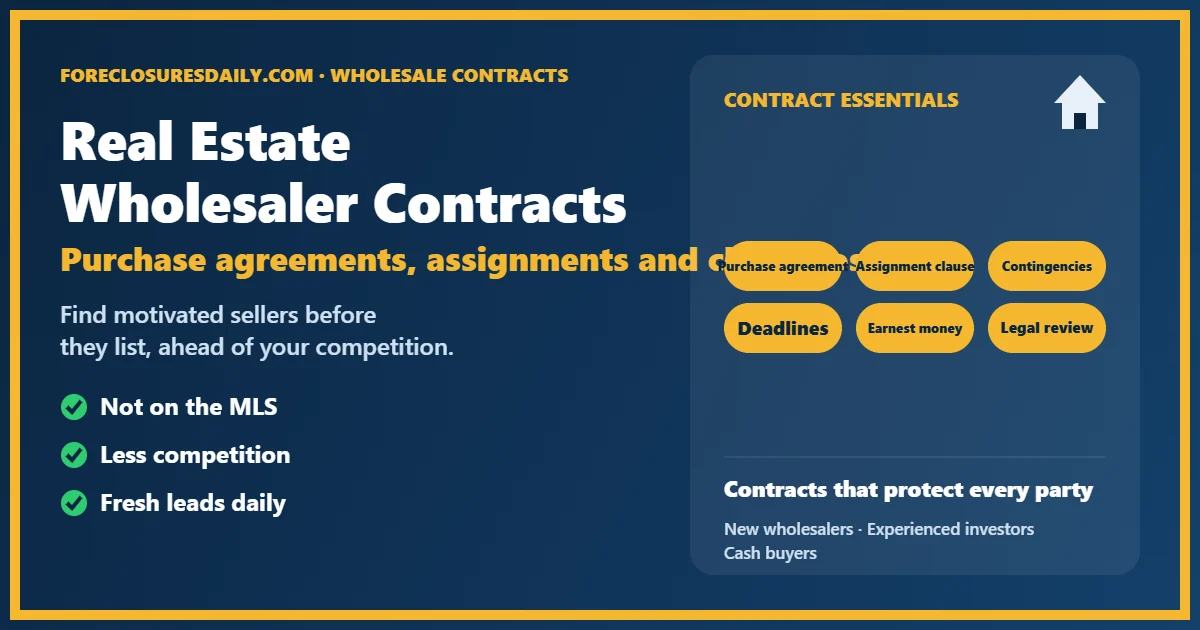
Why real estate wholesaler contracts matter
A wholesaler contract is the written agreement that gives you the right to buy a property and, usually, to assign that right to another buyer.
The contract outlines every term both parties agree to: the price, the timeline, the conditions and who is responsible for what. When it is drafted well, it prevents misunderstandings and disputes and gives everyone confidence that the deal will close.
In wholesaling, two documents usually do the work. The purchase agreement sets the terms between you and the seller. The assignment contract transfers your rights under that agreement to your end buyer in exchange for a fee.
Because you profit without ever owning the property, your contract is effectively your inventory. If it is vague, unenforceable or not assignable, you have nothing to sell.
A good contract also builds trust. Sellers who understand the terms feel comfortable signing, buyers who see clean paperwork feel comfortable paying your fee, and title companies can close without delays. Over time, that reputation brings repeat business and referrals.
- Vague language
- Missing deadlines
- Disputes and lost deals
- Clear, specific terms
- Firm deadlines and contingencies
- Smooth, profitable closings
Related guides

Listed and sold 25 properties and personally bought and sold four fix-and-flip properties, all generated from probate leads.
Carolynn Castillo
Realtor & Broker · eXp Realty
Critical components of a successful wholesaler contract
Every wholesale purchase agreement should cover the same core terms. Missing even one can derail a deal or expose you to liability.
The parties
Correct legal names of every seller and the buyer, plus language that allows you or your assignee to close.
The property
A full legal description and address, and what is included, such as fixtures or appliances.
Price and payment
The purchase price, the earnest money amount and when it is due, and how the balance will be paid.
Deadlines
Dates for inspections, financing, title review and closing, so everyone knows when performance is due.
Contingencies
Conditions such as inspection, clear title or buyer approval that let a party exit if they are not met.
Assignment clause
Clear permission to assign the contract, which is essential to the wholesale model.
Clear, concise and specific beats long and complicated. Each term should be easy for the seller, buyer and title company to understand.

Shannon Thompson
Investor · Joe Homebuyer of Atlanta
Watch Shannon Thompson share their experience using ForeclosuresDaily.com.
Purchase agreements and assignment contracts
Most wholesale deals use a purchase agreement with the seller and an assignment contract with the buyer. Understanding how they fit together is the heart of the business.
The purchase agreement
Sets the price, payment terms, closing date and each party’s responsibilities, along with any contingencies that could affect the sale.
- Price
- Closing date
- Contingencies
Make sure it names you “and/or assigns” or includes an assignment clause.
The assignment contract
Transfers your rights and obligations under the purchase agreement to the end buyer, who then closes with the seller. You earn an assignment fee.
- Assignment fee
- Buyer deposit
Collect a non-refundable deposit from your buyer to protect your fee.
The double close
Instead of assigning, you buy the property and immediately resell it in a second closing. This keeps your fee private but adds closing costs and may require funding.
- Two closings
- Funding
Use it when an assignment is not allowed or the spread is large.
Be transparent with everyone
Tell sellers you may assign the contract and tell buyers exactly what they are buying. Transparency protects your reputation and helps you avoid legal trouble.
Wholesalers who are open about how they work earn repeat sellers, repeat buyers and referrals.
Questions to ask before you sign
- 1Is the contract assignable?
- 2Are all owners signing?
- 3Are the deadlines realistic?
- 4Which contingencies protect me?
- 5How much earnest money is at risk?
- 6Has an attorney reviewed it?

Andrew Litchfield
Webinar host
Andrew Litchfield hosted a ForeclosuresDaily.com monthly webinar for real estate investors.
Legal considerations in wholesaler contracts
Contract law, licensing rules and disclosure requirements vary by state, and some states have specific rules about marketing contracts or acting as an unlicensed broker. Make sure every contract complies with the laws where the property sits, and have a real estate attorney review your templates before you use them.
Make it enforceable
A legally binding contract needs clear terms, competent parties, consideration and proper signatures. Templates found online may not meet your state’s requirements.
Know the disclosure rules
Some states require wholesalers to disclose their intent to assign or their role in the deal. Following those rules protects you and your sellers.
- 1Vague languageTerms open to interpretation
- 2Missing detailsNo legal description or deadlines
- 3No assignment clauseContract cannot be transferred
- 4Weak contingenciesNo way out if title fails
- 5Skipping legal adviceUnenforceable templates
- 6Poor communicationSurprised sellers and buyers
Best practices for negotiating and structuring contracts
Wholesalers who close consistently tend to:
Learn from others’ deals. Studying how experienced wholesalers structure contracts, negotiate terms and handle problems gives you practical lessons you can apply on your next deal.
ForeclosuresDaily.com hosts monthly webinars where experienced wholesalers and investors, including Phillip Warrick, explain how they structure and close deals.

Anthony Coletti
Real estate investor
Watch Anthony Coletti share their experience using ForeclosuresDaily.com.
How your assignment fee fits the contract
Your contract price must leave room for your buyer and your fee. Work backward from what an end buyer will pay, based on after-repair value and repairs, then subtract your assignment fee to find the most you can offer the seller.
Contract price = Buyer’s max price − Assignment fee
A buyer’s max is often estimated as 70% of ARV minus repairs, adjusted for the local market.
Write it into the purchase agreement only after you verify ARV and repairs.
Protect your earnest money
Use contingencies, such as an inspection period, so you can exit if the numbers fail. Keep earnest money reasonable for your risk.
Collect a buyer deposit
Require your end buyer to put down a non-refundable deposit when they sign the assignment, which protects your fee if they walk away.

Jeremy Resmer
Webinar host
Jeremy Resmer hosted a ForeclosuresDaily.com monthly webinar for real estate investors.

Nancy Wallace-Laab
Investor · nearly 20 years
Nancy focuses on the best outcome for both the seller and the investor, drawing on nearly 20 years of real estate investing experience.

Phillip Warrick
Full-time investor since 2003
Full-time real estate investor since 2003, with over 20 years of experience.
Contracts start with motivated sellers
- 1
Market early and often
The early bird gets the worm, and the squeaky wheel gets the grease. Consistent marketing puts you in front of owners before other buyers. Your goal is to reach the person who can sign a deed.
- 2
Network with professionals
Meetups and investor clubs are excellent for lining up financing, contractors, agents and buyers. Meet our team at a National REIA event near you.
- 3
Work off-market leads
Off-market homes may be for sale but not on the MLS, often because of a financial dilemma or a death. Owners want to exit quickly, which is where your contract comes in.
Deal checklist
- Confirm who owns the property
- Verify ARV with recent comparables
- Estimate repairs realistically
- Check title and liens
- Know your buyer’s criteria
- Have your contract reviewed
A motivated seller is an owner willing to sell below market value, or on favorable terms, because of a strict timeline. See our events calendar to meet investors and our team.

Antonio Stringfield
Probate investor · Los Angeles
Watch Antonio Stringfield share their experience using ForeclosuresDaily.com.
Wholesaling real estate contracts FAQ
Quick answers for wholesalers drafting and assigning contracts. Tap a question to open it.
QWhat is a wholesale real estate contract?
A purchase agreement that gives a wholesaler the right to buy a property, usually with permission to assign that right to another buyer.
QWhat is an assignment contract?
A document that transfers your rights under the purchase agreement to an end buyer in exchange for a fee.
QAre wholesale contracts legal?Yes
Yes, when they follow state contract, licensing and disclosure laws. Rules vary, so have an attorney review your documents.
QCan every contract be assigned?No
No. Some contracts prohibit assignment, so include clear assignment language or use a double close instead.
QWhat are the most common mistakes?
Vague language, missing details or deadlines, no assignment clause, weak contingencies and skipping legal advice.
QShould I use an online template?
Only as a starting point. Templates may not meet your state’s requirements, so get them reviewed by a local attorney.
Need deals to put under contract? Tell us your market and we will help you find motivated seller leads.
Put better deals under contract
Success in wholesaling starts with a solid contract and a steady supply of motivated sellers. Draft clear, enforceable agreements, be transparent with every party and verify your numbers before you sign.
ForeclosuresDaily.com has supplied off-the-grid real estate leads since 2004. Keep one step ahead of your competition with probate, foreclosure and divorce leads. See our lead products.