Probate wholesale investments: how wholesaling inherited homes works, the math and the rules
Probate wholesaling means putting an inherited property under contract with an estate, then assigning that contract to a cash buyer or closing and reselling quickly. Inherited homes are a natural fit: many need repairs, many heirs live far away, and many estates prefer a simple as-is sale to months of updates and showings.
It is also an area where care matters. Executors may need court approval to sell, families are grieving, and several states now regulate wholesaling with disclosure or licensing rules. This guide explains how probate wholesale deals work, how to run the numbers, and how to stay fair and compliant. It is general information, not legal advice.
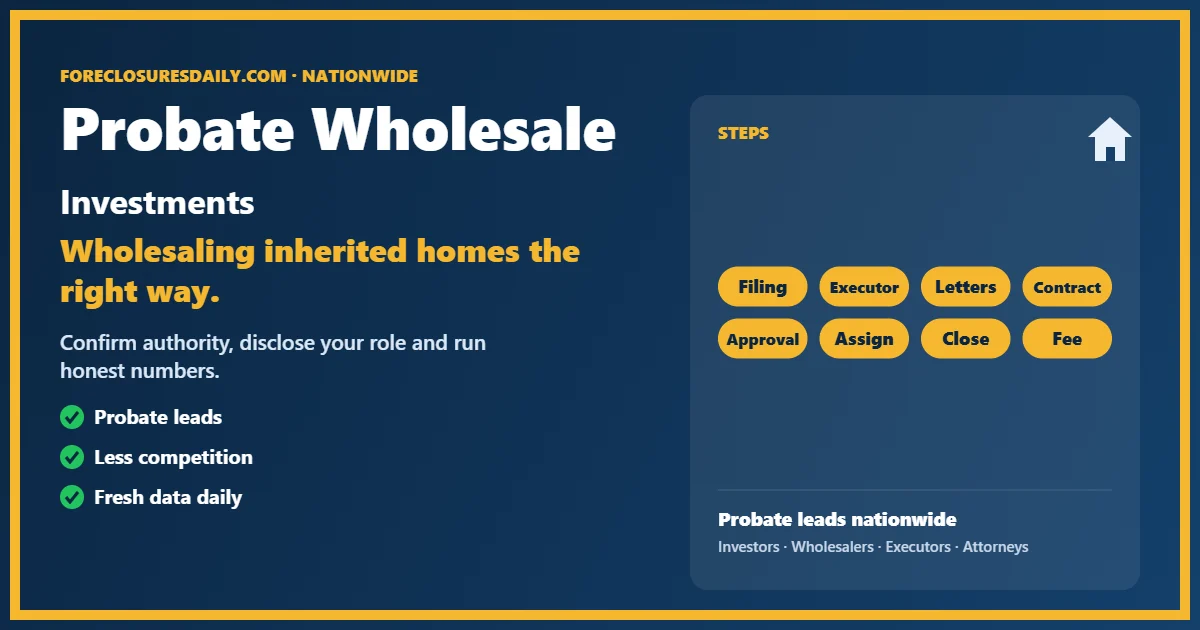
How a probate wholesale deal typically works
- 1
Find and research the estate
Probate filings show the decedent, the executor or administrator and often the attorney. Confirm the property, liens and whether the estate has authority to sell.
- 2
Contract with the right party
Only the personal representative or trustee can usually sign. Your contract should disclose your intent to assign or resell and allow for any court approval the state requires.
- 3
Assign or double close
Assign the contract to a cash buyer for a fee, or buy and resell. Use a title company or attorney experienced with estate sales.
Checklist
- Confirm executor authority
- Check court approval rules
- Verify liens and payoffs
- Disclose assignment intent
- Know your state’s wholesaling law
- Suggest independent advice
See also tips for buying probate properties and the guide to real estate inheritance.
Probate wholesale math: from ARV to assignment fee
Wholesalers work backward from what a cash buyer will pay. Many buyers use a rule of thumb such as 70% of after-repair value minus repairs, though actual buyer criteria vary by market. Before you sign, confirm that your fee still leaves the estate a fair price compared with what it could net by listing, and be ready to explain that comparison to the executor and the estate’s attorney.
Assignment fee = Cash buyer’s price − Your contract price with the estate
All figures are illustrative. Buyer criteria and local costs vary.
The estate still benefits when it gets a fair, quick as-is sale and avoids months of carrying costs, repairs and showings. Be transparent about the price and your role.
Repairs drive the number
Get real bids, not guesses.
Buyers set the ceiling
Know what your buyers will pay.
Court delays cost time
Some sales need judicial approval.
Track your results
Measure cost per deal by lead type.
Court approval, overbids and timing
Probate rules come from state law and vary widely. These are general patterns, not legal advice. A deal that looks simple on paper can stall for weeks if letters have not been issued, an heir objects or a hearing is continued, so budget extra time and keep your buyer informed.
Independent vs. supervised administration
In some states, executors with full independent authority can sell without court approval. In others, or in supervised estates, a sale may need a judge’s confirmation.
- Independent authority
- Supervised
Ask the estate’s attorney which applies.
Confirmation hearings and overbids
Where court confirmation is required, the accepted price may be opened to higher bids at the hearing. A wholesaler or end buyer can be outbid.
- Confirmation
- Overbids
Build that risk into your plan.
Letters and closing
The executor needs court-issued authority, often called letters testamentary or letters of administration, before signing. Closings can take longer than standard sales.
- Letters
- Timeline
Confirm authority before you spend money.
Wholesaling laws and fair dealing
Several states have passed laws that require wholesalers to disclose their intent to assign, give buyers or sellers cancellation rights, or hold a license when they market contracts. Federal and state rules also govern calls and texts. Learn your state’s rules, keep records and honor every opt-out.
Transparency protects families and your reputation.
Questions to ask an executor
- 1Do you have letters from the court?
- 2Does the sale need court approval?
- 3Are all heirs in agreement?
- 4Is there a mortgage or other lien?
- 5What condition is the home in?
- 6What timeline works for the estate?
Why probate properties suit wholesaling
Recent Census estimates put the US median home value near $333,000, with about 65% of homes owner-occupied. Many of those homes are owned by older adults and will pass through estates in the years ahead.
Inherited homes often have deferred maintenance after years of single ownership.
Heirs frequently live elsewhere and prefer a simple, as-is sale.
Probate filings are public records in most counties, so estates can be identified early.
Executors have duties to the estate, so they need clear terms and fair prices.
- Pressure grieving families
- Skip authority checks
- Cold-call without scrubbing
- Lead with help and patience
- Confirm letters and approval
- Follow call and text rules
Related resources
Six ways to structure a probate deal
Wholesaling is one option. Choose the structure that fits the estate, the property and the law in your state.
Assignment
Sign a contract with the estate and assign it to a cash buyer for a fee, with clear disclosure.
Double close
Buy from the estate and resell to your buyer, often on the same day, using separate funds or transactional funding.
Buy and flip
Purchase, renovate and sell retail. Higher potential profit, but more capital and risk.
Buy and hold
Keep the property as a rental if the numbers and local rental demand support it.
Referral to an agent
If the estate would net more by listing, refer it to an agent and earn goodwill or a referral fee where allowed.
Partnership with heirs
In some cases, heirs keep a share of the upside after repairs. Use clear written terms and legal advice.
Laws on assignment, licensing and referral fees vary by state. Check before you choose a structure.
What investors search for about probate and wholesaling
Wholesaling real estate draws about 4,400 searches a month in the US. Probate real estate draws about 880.
Legality is a top question
Is wholesaling real estate legal draws about 320 searches a month.
Contracts matter
Assignment of contract in real estate draws about 320 searches a month.
Probate investing is a niche
Probate leads draw about 170 searches a month and probate real estate investing about 50, which means less competition.
- 1Wholesaling real estateAbout 4,400
- 2Probate real estateAbout 880
- 3Assignment of contract real estateAbout 320
- 4Is wholesaling real estate legalAbout 320
- 5Probate leadsAbout 170
- 670 percent rule real estateAbout 70
- 7Probate real estate investingAbout 50
- 8Probate sale court confirmationAbout 20
How investors can stand out
Ways to serve estates well:
Search volumes are approximate. Figures are recent monthly US estimates and change over time. Use them to understand interest, not as exact counts.
ForeclosuresDaily.com hosts monthly webinars with investors such as Carolynn Castillo, who share how they find and evaluate deals.
What our customers say
Real investors share their experience with ForeclosuresDaily.com in short video reviews and press releases.







Probate wholesale investments: FAQ
Short general answers. This is not legal advice. Tap a question to open it.
QIs wholesaling legal?Yes
Generally yes, but several states regulate it with disclosure or licensing rules.
QWho signs for the estate?
Usually the executor, administrator or trustee with proper authority.
QCan a court sale be outbid?
Yes, where confirmation hearings allow overbids.
QWhat is an assignment fee?Yes
The difference between your contract price and what your buyer pays.
QShould I disclose that I plan to assign?
Yes. It is required in some states and builds trust everywhere.
QWhere do probate leads come from?
Public probate filings in county courts.
Want probate leads for wholesaling? Tell us your target counties and we will help you choose probate leads.
Find probate deals with less competition
Probate wholesaling rewards investors who confirm authority, disclose their role, run honest numbers and treat families with patience.
ForeclosuresDaily.com supplies probate, pre-probate, preforeclosure and absentee owner leads nationwide. Explore our lead products.