What is a real estate lis pendens? Meaning, effects and investor opportunities
A lis pendens, Latin for “suit pending,” is a public notice recorded in county land records that a lawsuit has been filed which could affect ownership of, or rights to, a specific property. It does not decide anything by itself. It simply warns anyone who might buy or lend against the property that a court case is underway.
Search data shows how often people run into this term. Lis pendens draws about 12,100 searches a month nationwide and lis pendens meaning about 3,600. For investors and agents, a lis pendens tied to a mortgage foreclosure is often the earliest public sign that an owner is in trouble. This guide explains what a lis pendens is, how it affects a sale and how to approach these owners fairly. It is general information, not legal advice.
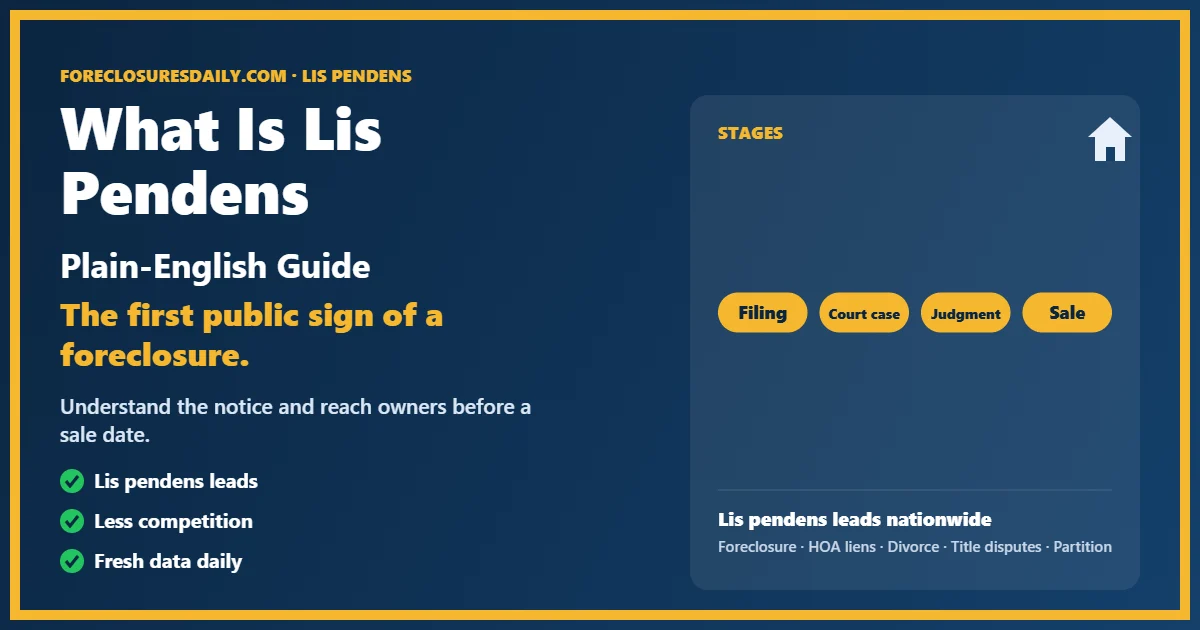
What a lis pendens is, and what it is not
A lis pendens is a recorded notice of a pending lawsuit involving real property. It puts the public on notice that whoever buys or lends against the property may be bound by the outcome of the case.
It is not a judgment and not a lien by itself, although the lawsuit behind it may seek to enforce a lien, such as a mortgage.
It is commonly filed in mortgage foreclosures, especially in states where foreclosures go through the courts.
It can also be filed in other disputes, such as boundary fights, contract claims, divorce property claims or construction disputes.
Rules on when and how a lis pendens can be filed, challenged or released vary by state.
- Ignore the underlying case
- Buy without title review
- Pressure the owner
- Get a title search
- Explain options plainly
- Respect the owner’s situation
Related resources
How a lis pendens fits into a foreclosure
In court-based foreclosures, the lis pendens is often recorded at the start of the case. Here is the typical path, which varies by state. In states where most foreclosures happen outside of court, a lis pendens is less common, and other notices, such as a notice of default, play a similar role.
Lawsuit and lis pendens
The lender files a foreclosure lawsuit and records a lis pendens against the property, making the case public.
- Complaint
- Recording
This is often the first public sign of trouble.
Court process
The owner can respond, negotiate with the lender, seek a loan modification or sell the home. Cases can take many months.
- Response
- Negotiation
Owners often have time to explore options.
Judgment and sale
If the case is not resolved, the court may enter judgment and order a sale. A sale or dismissal usually ends the lis pendens.
- Judgment
- Sale or release
Timing depends on state law and court schedules.
Selling during a lis pendens
An owner can usually still sell while a foreclosure lis pendens is pending, as long as the sale pays off the loan or the lender approves a short sale. The title company will require the case to be resolved at closing.
Coordinate closely with the lender and title company.
Questions before buying a property with a lis pendens
- 1What kind of lawsuit is it?
- 2Who filed it, and what does it seek?
- 3What is the loan payoff?
- 4Are there other liens?
- 5Is a sale date set?
- 6Will the title company insure the deal?
How often people search for lis pendens
Lis pendens draws about 12,100 searches a month nationwide, lis pendens meaning about 3,600 and what is a lis pendens about 1,300.
Owners receive notices
Notice of lis pendens draws about 1,000 searches a month.
Foreclosure is the common context
Lis pendens foreclosure draws about 480 searches a month.
Sellers have questions
Can you sell a house with a lis pendens draws about 40 searches a month.
- 1Lis pendensAbout 12,100
- 2Lis pendens meaningAbout 3,600
- 3What is a lis pendensAbout 1,300
- 4Notice of lis pendensAbout 1,000
- 5Lis pendens foreclosureAbout 480
- 6Lis pendens real estateAbout 320
- 7Can you sell a house with a lis pendensAbout 40
- 8How to remove a lis pendensAbout 20
What this means for investors
Owners are searching for answers:
Search volumes are approximate. Figures are recent national monthly estimates and change over time. Use them to understand interest, not as exact counts.
ForeclosuresDaily.com hosts monthly webinars with investors such as Carolynn Castillo, who share how they find and evaluate deals.
Common reasons a lis pendens is filed
Most lis pendens filings relate to foreclosures, but several other disputes can lead to one.
Mortgage foreclosure
The lender sues to enforce the mortgage. This is the most common source of lis pendens leads.
HOA or condo lien foreclosure
Associations can sue to foreclose on unpaid dues in many states.
Divorce property disputes
A spouse may record a lis pendens to protect a claim to the home during a case.
Contract and title disputes
Buyers, sellers or relatives may sue over a sale contract or ownership.
Construction disputes
Contractors may pursue claims related to unpaid work on the property.
Partition actions
Co-owners, often heirs, may ask a court to divide or sell a property.
The type of case matters. Always read the underlying lawsuit before making decisions. A single property can have more than one recorded case, so review every filing on the address.
How investors use lis pendens data fairly
- 1
Get the records
Lis pendens filings are public. Lead services and county records list new filings, often with case numbers and property details.
- 2
Focus on foreclosure filings
Mortgage foreclosure lis pendens point to owners who may want to sell before a judgment, protect their credit and keep any equity.
- 3
Reach out with care
Send respectful letters that explain options, including talking to the lender or a housing counselor, and follow do-not-call and consent rules.
Checklist
- Confirm the case type
- Check the loan balance
- Scrub do-not-call lists
- Use a clear opt-out
- Mention free counseling options
- Keep records of consent
See also lis pendens in Broward County and lis pendens in Horry County.
Running the numbers on a lis pendens property
Start with the after-repair value and work backward. Make sure your price covers the loan payoff, or the sale will need lender approval. Get contractor bids and compare your after-repair value with at least three recent sales of similar repaired homes nearby before you make an offer.
Profit = After-repair value − Purchase (including loan payoff), repairs, holding and selling costs
Get a written payoff from the lender.
About 11% of the resale price. If the payoff is higher than expected or other liens appear, the deal may need a short sale or may not work.
Payoffs change
Interest and fees grow until closing.
Other liens matter
Run a full title search.
Owners keep equity
A fair deal can protect the seller’s credit and equity.
Speed helps everyone
Closing before judgment reduces costs.
What our customers say
Real investors share their experience with ForeclosuresDaily.com in short video reviews and press releases.









What is a real estate lis pendens? FAQ
Short answers about lis pendens. This is general information, not legal advice. Tap a question to open it.
QWhat does lis pendens mean?Yes
A recorded notice that a lawsuit could affect a property.
QIs a lis pendens a lien?
Not by itself, though the lawsuit may seek to enforce a lien.
QCan I sell a house with a lis pendens?
Usually, if the sale resolves the claim, such as paying off the loan.
QHow is a lis pendens removed?Yes
Typically by dismissal, settlement or a court order. Ask an attorney.
QDoes a lis pendens mean foreclosure?
Often, but it can relate to other disputes too.
QAre lis pendens records public?
Yes. They are recorded in county land records.
Want lis pendens leads? Tell us your target counties and we will help you choose preforeclosure leads.
Use lis pendens data responsibly
Lis pendens records reward investors who understand the case, run title searches and treat owners with respect.
ForeclosuresDaily.com supplies lis pendens, preforeclosure, probate and absentee owner leads nationwide. Explore our lead products.