How to flip a house in Florida: insurance, storms and smart renovations
Learning how to flip a house in Florida means mastering the basics every flipper needs, plus a few things unique to the Sunshine State. Insurance costs, flood zones, hurricane-resistant construction and seasonal demand can make or break a Florida flip.
























Hear From Our Customers
Click a profile to watch their video or read their story.






How Florida’s housing market works for flippers
Florida draws tourists, retirees and new residents from across the country, which creates broad housing demand but also wide differences between markets.

The state’s diverse economy, lack of a state personal income tax and warm climate make it an attractive place to live and invest. Popular flipping markets include Miami, Orlando, Tampa and Jacksonville, each with its own price points, buyer profiles and pace.
Watch economic and demographic trends closely. Population growth, new jobs and infrastructure projects can lift neighborhoods, while rising insurance premiums, interest rates or a slowdown in buyer demand can stretch the time it takes to sell.
Seasonality matters too. Some coastal and retirement markets see more buyer activity in winter, while family-oriented suburbs follow the school calendar. Timing your listing well can shorten your hold.
Finally, remember that Florida buyers are increasingly informed about storm risk. Homes with newer roofs, impact-rated openings and documented wind mitigation features can stand out, sell faster and help buyers secure more affordable insurance.
Florida-specific costs every flipper should budget
Many Florida flips that look profitable on paper lose money because of costs that are easy to underestimate elsewhere.
Property and wind coverage
Homeowners insurance in Florida can be expensive, and older roofs or systems can make a home hard to insure at all. Get quotes before you buy.

Wind mitigation features such as roof straps and impact windows can lower premiums.
Flood zones
Check flood maps for every property. Homes in high-risk zones may require flood insurance, which affects both your holding costs and your buyer’s budget.
Property taxes on investment homes
Investment properties do not get the homestead exemption, and their assessed value can rise faster than a homesteaded home’s. Use current tax estimates in your budget.

Condos carry extra checks

Florida tightened condo safety rules after the 2021 Surfside collapse, including structural inspection and reserve requirements for many buildings.
Before flipping a condo, review the association’s inspections, reserves and any planned assessments.
Florida questions before you buy
- 1How old is the roof?
- 2Can the home be insured, and at what cost?
- 3Is it in a flood zone?
- 4Are there open permits or code violations?
- 5What sale prices are renovated homes nearby getting?
- 6How long do similar homes take to sell?
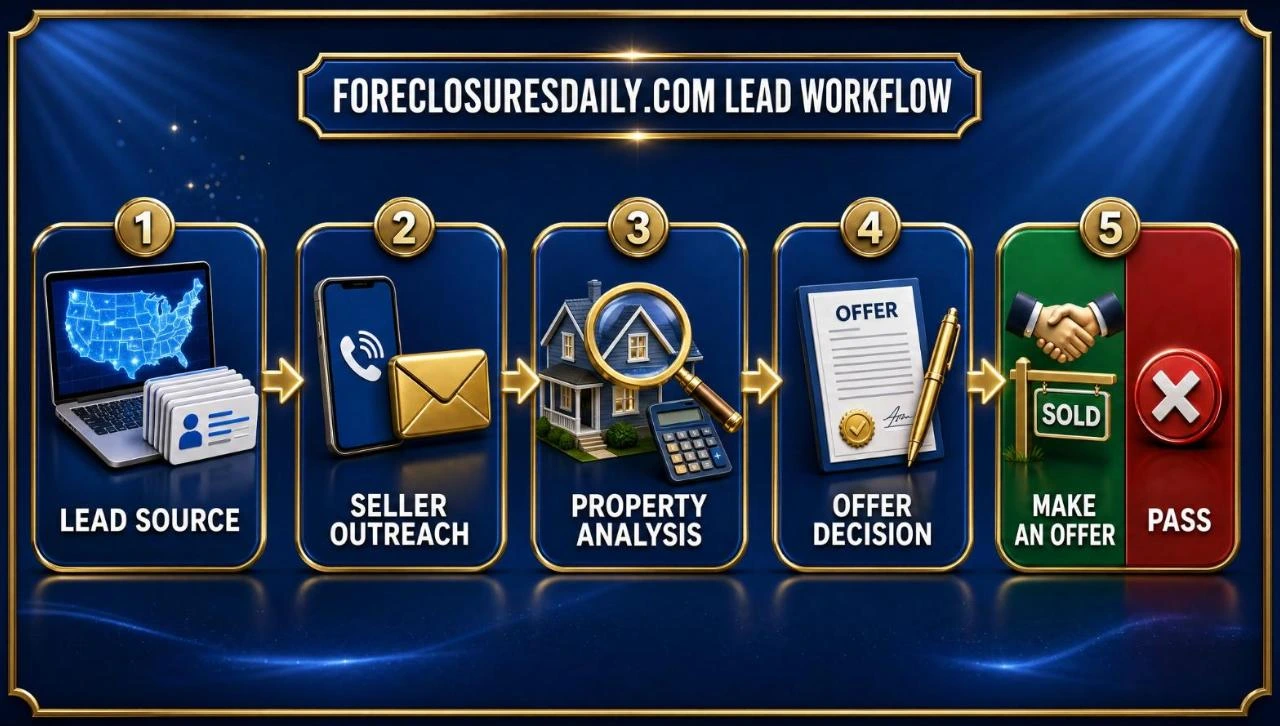
Motivated sellers looking to liquidate fast
Because of this, ForeclosuresDaily.com built its off-market real estate platform to cover every major distress signal nationwide, cross-referenced with tax rolls and property appraiser records.





Running the numbers to flip a house in Florida
Estimate the after-repair value from recent sales of similar renovated homes, then subtract the purchase price, repairs, holding costs (taxes, insurance, utilities, interest) and selling costs. In Florida, insurance and storm-related upgrades deserve their own lines in the budget.

Profit = ARV − Purchase + rehab + holding + selling
Build in a contingency fund; older Florida homes often hide roof, plumbing and moisture issues.
Get insurance quotes before you lock in the purchase.
Run a CMA every time

A comparative market analysis shows whether the purchase price, repairs and holding costs leave the margin you need. Buying at the right price is the foundation of every successful flip.
Stress-test your timeline

Permit delays, contractor availability after storms and slower seasons can stretch a project. Make sure the deal still works if it takes longer.
Finding the right house to flip in Florida
Agents, online listings and auctions all have Florida deals, but the most profitable often come from off-market sellers who need to move quickly. Define your target first: single-family homes, condos or small multifamily, and the neighborhoods where renovated homes sell fast.
Network for off-market deals

Industry events, local investor groups, wholesalers and contractors can give you early access to opportunities and hidden gems.
Use motivated seller leads
Probate, preforeclosure, divorce and absentee owner leads point to Florida owners who may prefer a quick, as-is sale.
- 1Probate estatesHeirs selling as-is
- 2PreforeclosuresOwners facing deadlines
- 3Absentee ownersSnowbirds and landlords
- 4Storm-damaged homesOwners who cannot rebuild
- 5WholesalersDeals under contract
- 6AuctionsForeclosure and tax sales
What makes a strong Florida flip
Prioritize properties that offer:

Due diligence protects your profit. Check condition, repair costs, flood and insurance risk, open permits and the neighborhood’s appreciation potential before you sign. Proximity to schools, shopping and transportation also drives resale value.
ForeclosuresDaily.com hosts monthly webinars with flippers such as Roman Soyko and Phillip Warrick, who share how they evaluate deals.
Florida renovation priorities
A solid renovation plan outlines the scope, budget and timeline. In Florida, smart flippers pair buyer-pleasing updates with improvements that reduce storm and insurance risk.
Roof and openings
A newer roof, impact windows or shutters can make a home easier to insure and more attractive to buyers.
Kitchens and baths

Updated kitchens and bathrooms remain the biggest drivers of buyer interest and value.
Durable flooring
Tile and quality vinyl handle humidity and Florida lifestyles better than many alternatives.
Moisture and HVAC

Fix leaks, mold and aging air conditioning; buyers and inspectors will look closely.
Curb appeal
Permits and code

Follow local building codes and pull permits. Non-compliance can lead to fines, delays and failed inspections.
Hire licensed, insured contractors, compare detailed bids and inspect the work regularly to keep the project on time and on budget.
Financing and selling when you flip a house in Florida
Choose your financing
Traditional mortgages are often too slow for flips. Many Florida investors use hard money loans, which approve quickly based on the property’s value, or private money from individuals and investment groups.
Manage the renovation
Keep open communication with your contractor, visit the site regularly and address issues early so the project stays on schedule and up to code.
Market and sell
Stage the home, use professional photos, highlight storm-resistant upgrades and price from recent comparables to sell quickly.
Compare Florida flip lenders on

Shop around with local lenders, mortgage brokers and investor groups to find the financing that fits your project. Learn more about probate homes as a flip source.
ForeclosuresDaily off-market opportunities before your competition
In fact, investors, wholesalers, flippers, and agents have used ForeclosuresDaily.com since 2004 to reach motivated sellers before anyone else.
How to flip a house in Florida: FAQ
Which Florida cities are popular for flipping?
Miami, Orlando, Tampa and Jacksonville are common choices, but the best market is one you know well.
Why is insurance so important in Florida?
Premiums can be high and some older homes are hard to insure, which affects holding costs and your buyer’s ability to buy.
Do I need to check flood zones?
Yes. Flood risk affects insurance, financing and buyer demand, so check maps before you buy.
Do investment properties get the homestead exemption?
No. The homestead exemption applies to owner-occupied primary residences, not flips.
How do Florida flippers finance deals?
Mostly with hard money, private money, partners or cash, since traditional mortgages are often too slow.
Do I need permits for renovations?
Usually yes. Follow local building codes and pull permits to avoid fines and delays.
Related guides: How to Wholesale Real Estate in Florida: Tips for Success, Foreclosure Lis Pendens in Lake County, Florida: Early Leads From Clermont to Leesburg, Distressed Real Estate in Largo, FL: Local Data, Property Types and Deal Guide.
Land your next Florida flip ahead of other buyers
Florida rewards flippers who plan for insurance, storms and seasonal demand, buy at the right price, renovate to code and sell quickly. Turn rundown properties into homes buyers want, and the profit follows.