How to find the owner of a house: public records, assessors and investor tools
Knowing how to find the owner of a house helps whether you want to buy, research a neighborhood, settle a boundary question or reach an off-market seller.
In most of the U.S., basic ownership information is public record. This guide shows where records live, how to search them, how to trace past owners and how investors use the data responsibly.






















Hear From Our Customers
Click a profile to watch their video or read their story.





Why property ownership information is public
Local governments keep ownership records so taxes can be assessed and title can transfer reliably, and most of those records are open to the public.
When a house sells, the deed is recorded with the county recorder, register of deeds or clerk. Meanwhile, the assessor values the property and the tax collector tracks who pays the bill.

Together, these offices hold the owner’s name, tax mailing address, parcel number, assessed value and sale history.
Keep in mind that records may list an LLC, trust or estate rather than a person. Online data sites also compile this information, but it can be outdated, so confirm anything important with the county.
| Guesswork | Public records |
|---|---|
| Knocking on random doors | Official ownership data |
| Relying on neighbors | Parcel and tax details |
| Outdated information | Verified, current facts |
Why people look up the owner of a house
Ownership research is useful far beyond investing:


How to find the owner of a house by address
Start with official county records, which are the most reliable source and usually cost little or nothing:
- Search the county assessor.
Look up the address or parcel number to find the owner of record, tax mailing address and assessed value.
- Check the recorder or register of deeds.
Review recorded deeds and mortgages to confirm the owner and see when the property last sold.
- Confirm with tax and map records.
See whether taxes are current, and use county GIS parcel maps to confirm boundaries.
Make your search faster

If a county has no online portal, call or visit the office. Staff can usually help, though some copies carry a small fee.
How to find previous owners of a house
Learning how to find the owner of a house sometimes means tracing past owners, too.

Every recorded deed names the seller (grantor) and the buyer (grantee). So by searching deeds backward from the current owner, you can build the chain of title. In addition, a title company can run a professional title search, and agents can share listing histories.
| Source | What it shows |
|---|---|
| Assessor | Owner, value, property details |
| Recorder | Deeds, mortgages, liens |
| Tax collector | Payment status, mailing address |
| GIS maps | Parcel boundaries |
| Courts | Probate, divorce, foreclosure |
| Title company | Full chain of title |
When the owner isn’t a person

If an LLC owns the house, look it up in your state’s business records to find its registered agent or managers. For a trust or estate, the trustee, executor or heirs are the decision-makers.
Use ownership data responsibly. It is public for legitimate purposes such as buying, selling and due diligence. Respect privacy, follow contact and Do Not Call rules and never use records to harass anyone.
How investors find the owner of a house
Knowing how to find the owner of a house is the first step in most off-market deals.
Investors use ownership research to find off-market opportunities, and the goal is always to reach the person who can sign a deed:

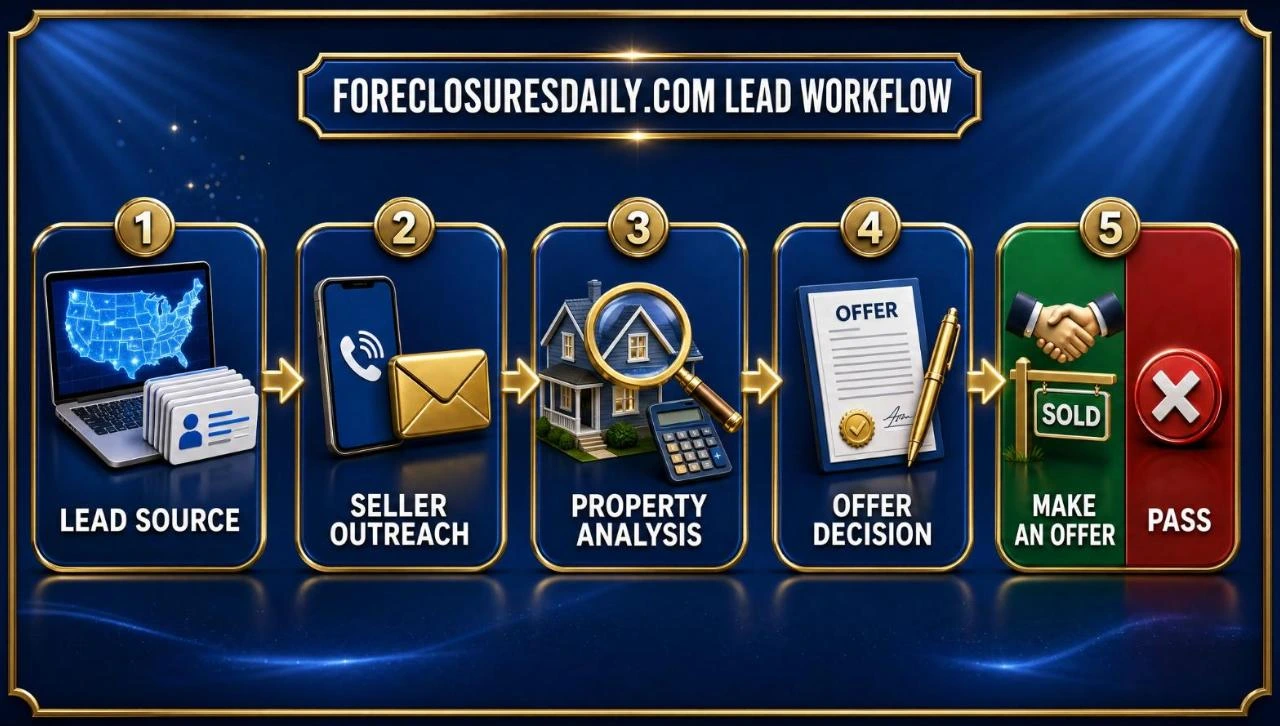
Searching county records one address at a time is slow. ForeclosuresDaily.com, however, matches life-event filings with ownership and property data and organizes them by area, so you can focus on outreach.
Verify these facts first
Motivated sellers who need to sell fast
The off-market platform at ForeclosuresDaily.com covers all major distress signals across the country, matched against tax rolls and property appraiser records.







How to find the owner of a house: FAQ
How can you find the owner of a house?
Search the county assessor or recorder of deeds by address or parcel number. Most counties list the owner of record.
 Is property ownership information public?
Yes. In most U.S. counties, the owner of record, sale history and tax data are public.
How do I find previous owners of a house?
Search recorded deeds backward to build the chain of title, or ask a title company.
 Can I find an owner’s phone number in public records?
Usually not. Records show names and mailing addresses; investors use skip tracing for current contacts.
 Is it legal to contact a property owner?
Yes, for legitimate purposes, as long as you follow mail, calling and texting rules and respect opt-outs.
Related guides: sell your house on Zillow fast, list of real estate sellers and Mid-Atlantic Real Estate Investors Association.
Turn ownership data into real estate opportunities
Verify who owns a property and who can sell it, then reach motivated owners first with ForeclosuresDaily.com.