How to choose a real estate broker: a guide for buyers, sellers and investors
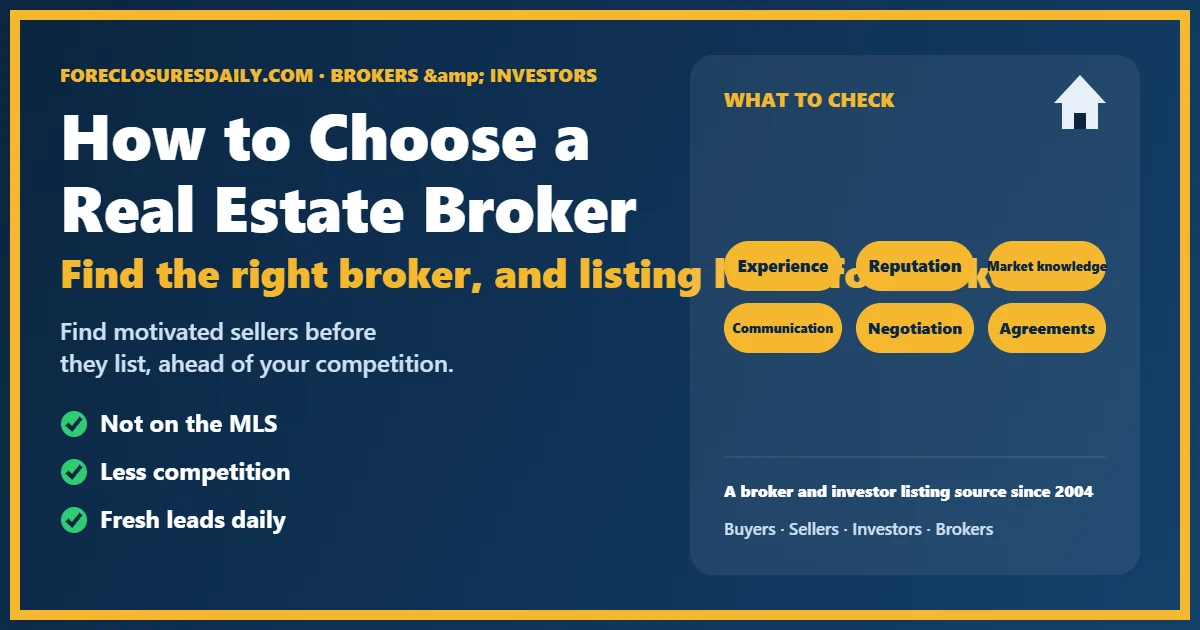
Knowing how to choose a real estate broker can shape your whole transaction. Whether you are a first-time buyer, a seller or a seasoned investor, the right broker brings market knowledge, negotiation skill and a steady hand through paperwork and surprises.
This guide covers what a broker does, the qualities that matter most, how to research and interview candidates, the questions to ask, and what to check before you sign. It also explains how brokers use off-market listing leads to serve investor clients.
What does a real estate broker do?
A real estate broker is a licensed professional who helps people buy, sell or invest in property and, unlike many agents, can run a brokerage and supervise other agents.
Brokers act as the intermediary between buyers and sellers. They price properties, market listings, find suitable homes or investments, negotiate terms, coordinate paperwork and help solve problems that come up before closing.
Brokers usually complete more education and licensing than agents, and many specialize: residential homes, luxury property, commercial real estate or investor clients. That specialization matters, because a broker who mainly sells starter homes may not be the best fit for a buyer seeking distressed investment property.
For investors, a broker with access to off-market opportunities can be especially valuable. These are properties for sale but not listed on the MLS, often from owners who need to sell quickly.
Choosing well starts with knowing what you need. A seller may want strong marketing and pricing skill, a buyer may want negotiation and patience, and an investor may want speed, deal flow and comfort with distressed properties. Write down your goals before you start calling brokers.
- Licensed to help clients
- Works under a broker
- Focuses on transactions
- Additional licensing
- Can run a brokerage
- Supervises agents and deals
Listing sources for brokers

Listed and sold 25 properties and personally bought and sold four fix-and-flip properties, all generated from probate leads.
Carolynn Castillo
Realtor & Broker · eXp Realty
Qualities that set a great broker apart
The best brokers combine skill with character. Look for these traits from your first conversation.
Integrity
An ethical broker gives honest advice, even when it is not what you want to hear, and puts your interests first.
Transparency
Clear explanations of fees, timelines and risks so you always know where you stand.
Responsiveness
Prompt replies and proactive updates keep deals moving and prevent missed deadlines.
Local knowledge
A deep understanding of local trends, values and neighborhoods to spot opportunities and price correctly.
Track record
A history of successful transactions and satisfied clients shows they can deliver results consistently.
Compatibility
A working style and communication approach that fits yours makes a long process much easier.
Awards and recognition can signal strong performance, but client reviews and closed deals in your market tell you more.

Shannon Thompson
Investor · Joe Homebuyer of Atlanta
Watch Shannon Thompson share their experience using ForeclosuresDaily.com.
How to research and interview potential brokers
Start by listing possible brokers in your area, then dig into their credentials and reputation. Read reviews, testimonials and client feedback, and look for a strong record of closed deals in the property type and neighborhood you care about.
Interview more than one
Meet at least two or three candidates. Comparing answers side by side shows you who truly understands your goals and who is giving a generic pitch.
Look for specialization
Ask what share of their business matches yours. A broker who regularly works with investors understands cash offers, as-is purchases and fast closings.
- 1ExperienceHow long have you been a broker?
- 2SpecialtyWhat property types do you focus on?
- 3MarketWhich neighborhoods do you know best?
- 4CommunicationHow and how often will we talk?
- 5AvailabilityWho handles my deal day to day?
- 6ResultsCan you share recent comparable sales?
Evaluating communication and negotiation
Pay attention to how each broker:
Trust your instincts. After the research and interviews, choose the broker whose skills, experience and style best match your needs. Rapport and trust make every later conversation easier.
ForeclosuresDaily.com hosts monthly webinars where agents and brokers such as Carolynn Castillo share how they find listings and serve investor clients.

Andrew Litchfield
Webinar host
Andrew Litchfield hosted a ForeclosuresDaily.com monthly webinar for real estate investors.
Understand what you will pay your broker
Broker compensation is negotiable and should be spelled out in writing. Many sellers pay a percentage of the sale price, while some brokers offer flat fees or tiered pricing. Buyers may also sign agreements that describe how their broker is paid. Know the numbers before you commit so there are no surprises at closing.
Fee = Sale price × Agreed rate
Ask whether the rate covers marketing, photography, staging advice and transaction management.
Weigh cost against value: pricing skill and negotiation can outweigh a lower fee.
Cheapest is not always best
A broker who prices correctly and negotiates well may earn you more than the difference in fees. Compare the full service, not just the rate.
Read every term
Check how long the agreement lasts, what happens if you cancel, and whether you owe a fee if you find the buyer or seller yourself.

Anthony Coletti
Real estate investor
Watch Anthony Coletti share their experience using ForeclosuresDaily.com.

Nancy Wallace-Laab
Investor · nearly 20 years
Nancy focuses on the best outcome for both the seller and the investor, drawing on nearly 20 years of real estate investing experience.

Phillip Warrick
Full-time investor since 2003
Full-time real estate investor since 2003, with over 20 years of experience.
Off-market listing leads for brokers and investors
Brokers who work with investors need a steady supply of opportunities. Off-market leads point to owners who may need to sell soon, often before they ever call a listing agent.
Probate and inheritance
Heirs and executors frequently need help selling a property, especially when they live far away or the home needs work.
- Executors
- Heirs
A broker who understands estates can become the family’s trusted advisor.
Foreclosure and divorce
Owners facing foreclosure or dividing assets in a divorce often need a fast, well-managed sale.
- Preforeclosure
- Divorce
Clear options and calm guidance matter more than a hard pitch.
Distressed and absentee
Absentee landlords and owners of distressed homes are natural sellers to investor clients looking for discounted property.
- Absentee
- Distressed
Match these sellers with investor buyers to close more deals.
Turn leads into listings
Data on its own does not create a listing. Filter by area and lead type, then reach out with a helpful, respectful message.
A consistent follow-up system turns a list of names into conversations, appointments and signed listing agreements.
What to review in a broker agreement
- 1The scope of services included
- 2The fee and how it is paid
- 3How long the agreement lasts
- 4How either side can end it
- 5Who represents whom in the deal
- 6Any exclusivity terms

Jeremy Resmer
Webinar host
Jeremy Resmer hosted a ForeclosuresDaily.com monthly webinar for real estate investors.
Signing with the right broker
- 1
Compare your finalists
Weigh experience, reputation, market knowledge, communication and personal fit for each candidate you interviewed.
- 2
Review the agreement
Read the terms carefully so you understand the services, fees and obligations. Fees are negotiable, so ask questions before you sign.
- 3
Set expectations
Agree on how often you will hear from your broker, how decisions are made and what success looks like for your goals.
Your broker should
- Hold a current license in your state
- Know your target neighborhoods well
- Have recent deals like yours
- Communicate the way you prefer
- Explain fees and terms clearly
- Put your interests first
Prioritize integrity, transparency and professionalism. With the right broker, you can navigate even complex transactions with confidence. Keep notes from every interview so you can compare candidates fairly, and do not be afraid to walk away from a broker who pressures you to sign before you are ready.

Antonio Stringfield
Probate investor · Los Angeles
Watch Antonio Stringfield share their experience using ForeclosuresDaily.com.
Choosing a real estate broker: FAQ
Short answers to common questions. Tap a question to open it.
QWhat is the difference between a broker and an agent?
Brokers complete additional education and licensing and can run their own brokerage and supervise agents. Agents work under a broker.
QHow many brokers should I interview?
At least two or three, so you can compare experience, approach and communication style.
QAre broker fees negotiable?Yes
Yes. Fees and terms are negotiable, so discuss them openly before you sign an agreement.
QShould investors use a specialist broker?Yes
Usually yes. Brokers who work with investors understand cash offers, as-is sales and off-market opportunities.
QDo reviews really matter?Yes
Yes. Reviews, testimonials and closed deals in your market are strong signals of service quality.
QCan brokers find off-market properties?
Many do, through their networks and lead sources such as probate, foreclosure and absentee owner data.
Are you a broker serving investors? Tell us your market and we will help you choose listing leads that fit your clients.
Find better listings and investor deals
Finding the right real estate broker takes careful research and an honest look at experience, reputation, market knowledge, communication and fit. For brokers, the challenge is the reverse: finding motivated sellers and opportunities investors want.
If you are a buyer or seller, take your time, interview several candidates and choose the broker you trust most. If you are a broker, build a pipeline that does not depend on referrals alone, so you always have new conversations with owners who need help.
ForeclosuresDaily.com has supplied off-market real estate leads since 2004. Brokers and agents use our probate, foreclosure, divorce and absentee owner data as a listing source. Explore our lead products.