Code violations: how investors find and fix properties under code enforcement
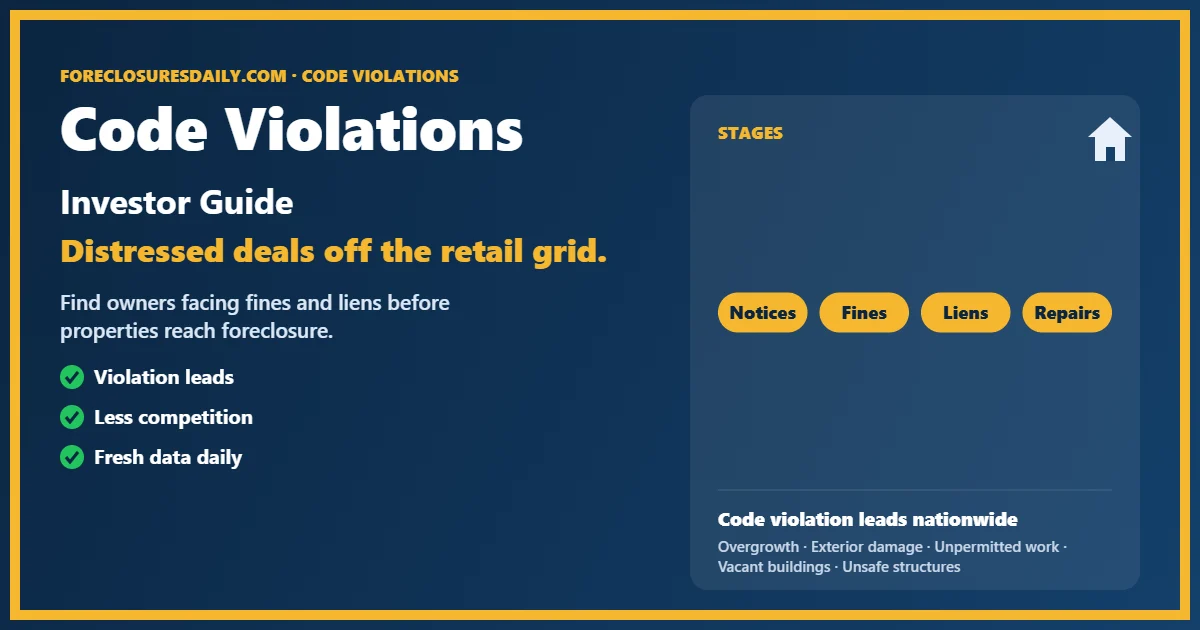
Code violations are notices from a city or county that a property does not meet local rules for safety, maintenance or use. Common examples include overgrown yards, broken windows, roof damage, unpermitted work and unsafe structures. When an owner cannot or will not fix them, fines and liens can pile up, and the property may become a candidate for a sale.
For investors, code violation records can point to motivated sellers before a property ever reaches a foreclosure list. But they also come with real obligations. This guide explains how code enforcement typically works, where violation data comes from, how fines and liens affect a deal and how to run the numbers. Rules vary by city, so always confirm the local process.
The typical code enforcement process
Every city has its own rules, but most code enforcement follows a similar path from complaint to resolution. Timelines, fine amounts and the city’s options differ widely, so a violation that is a minor nuisance in one city can lead to a lien foreclosure in another. Always read the specific case file and ask the code enforcement office what remains open.
Complaint or inspection
A neighbor complaint or a routine inspection leads an officer to document a problem and issue a notice with a deadline to fix it.
- Notice
- Deadline
Early notices are often easy to resolve.
Fines and hearings
If the problem is not fixed, the city may hold a hearing and impose daily fines. Fines can grow quickly on long-running cases.
- Hearings
- Daily fines
Check the case history and current balance.
Liens and further action
Unpaid fines often become liens on the property. In some places, cities can repair, demolish or even foreclose on a lien.
- Liens
- Demolition
Liens may need to be paid or negotiated at closing.
Fines can sometimes be reduced
Many cities allow owners or new buyers to request lien reductions once violations are fixed. Policies vary widely, so ask the city early and get the terms in writing.
Never assume a reduction until it is approved.
Questions before buying a property with code violations
- 1What are the open violations?
- 2How much are fines and liens today?
- 3Does the city offer lien reductions?
- 4What will repairs and permits cost?
- 5Is the property safe to occupy?
- 6What do repaired homes nearby sell for?

Listed and sold 25 properties and personally bought and sold four fix-and-flip properties, all generated from probate leads.
Carolynn Castillo
Realtor & Broker · eXp Realty
Why code violations signal motivated sellers
A property with long-running code violations often has an owner under financial, physical or emotional strain. Fines, liens and repeated notices can push an owner toward selling, especially if they live elsewhere or inherited the home. Nationwide, roughly half of homes were built before 1980, so aging properties needing work are common.
Out-of-state owners and heirs may not know how to resolve violations and may prefer a simple sale.
Owners facing growing daily fines often want a solution quickly.
Some violation properties are vacant, which can lead to more problems and more urgency.
Investors who explain the process clearly and treat owners fairly earn trust. Clear, written explanations of the process help owners make informed decisions.
- Ignore liens and fines
- Skip permit checks
- Underestimate repairs
- Confirm balances with the city
- Pull permit records
- Get contractor bids
Related resources

Shannon Thompson
Investor · Joe Homebuyer of Atlanta
Watch Shannon Thompson share their experience using ForeclosuresDaily.com.
How to find code violation properties
- 1
Use public records
Many cities publish code enforcement cases online or provide them through public records requests. Records usually include the address, violation type and case status.
- 2
Use curated lead lists
Code violation lists combined with absentee owner, probate and tax delinquent data help you focus on owners most likely to sell.
- 3
Reach out respectfully
Use mail, door knocking and compliant calls and texts. Explain how you can help resolve the violations, and follow do-not-call and consent rules.
Checklist
- Verify ownership
- Confirm case status
- Scrub do-not-call lists
- Use a clear opt-out
- Know local values
- Keep records of consent
See also housing code violation leads and off-market properties for sale.

Andrew Litchfield
Webinar host
Andrew Litchfield hosted a ForeclosuresDaily.com monthly webinar for real estate investors.
Common code violations and what they mean for a deal
Not all violations are equal. Some are cosmetic, while others signal serious structural or safety problems.
Overgrown yards and debris
Usually cheap to fix and often a sign of an absent or overwhelmed owner.
Exterior damage
Broken windows, damaged roofs or peeling paint can be moderate repairs but may hide water damage inside.
Unpermitted work
Additions or conversions without permits may need to be legalized or removed, which affects value.
Unsafe structures
Structural damage or fire damage can lead to vacate orders or demolition and needs expert review.
Vacant and unsecured buildings
Open or boarded buildings often have repeated violations, higher fines and vandalism risk.
Rental and occupancy violations
Overcrowding or illegal units can mean tenants, relocation issues and legal questions.
Rules and penalties vary by city. Always confirm what each violation requires locally. A single property can have several open cases, so review every case on the address, not just the most recent one.

Anthony Coletti
Real estate investor
Watch Anthony Coletti share their experience using ForeclosuresDaily.com.
What people search about code violations
Code violations draw about 390 searches a month nationwide, and code enforcement complaints about 210, a sign of how common these issues are.
People look for lists
Code violation list draws about 170 searches a month.
Housing violations are their own topic
Housing code violations draw about 140 searches a month.
Buyers have questions
Buying a house with code violations draws about 20 searches a month.
- 1Code violationsAbout 390
- 2Code enforcement complaintAbout 210
- 3Code violation listAbout 170
- 4Housing code violationsAbout 140
- 5Property code violationsAbout 40
- 6How to find code violation propertiesAbout 20
- 7Buying a house with code violationsAbout 20
- 8Code enforcement liensAbout 10
How investors can use this data
Turn interest into action:
Search volumes are approximate. Figures are recent national monthly estimates and change over time. Use them to understand interest, not as exact counts.
ForeclosuresDaily.com hosts monthly webinars with investors such as Carolynn Castillo, who share how they find and evaluate deals.

Jeremy Resmer
Webinar host
Jeremy Resmer hosted a ForeclosuresDaily.com monthly webinar for real estate investors.
Running the numbers on a code violation property
Include fines, liens and permit costs alongside repairs. These costs are easy to miss and can turn a good deal into a loss. Get contractor bids, a permit timeline and a written payoff of all fines and liens before you make an offer, and compare your after-repair value with at least three recent sales of similar repaired homes nearby.
Profit = After-repair value − Purchase, liens, repairs, holding and selling costs
Confirm every balance with the city before you buy.
About 10% of the resale price. If the city approves a lien reduction, profit rises; if fines are higher than expected, it falls.
Balances change daily
Get a current payoff letter before closing.
Permits take time
Plan for city inspections and sign-offs.
Hidden damage is common
Inspect thoroughly before you buy.
Fixing helps neighborhoods
Resolving violations improves the block for everyone.

Antonio Stringfield
Probate investor · Los Angeles
Watch Antonio Stringfield share their experience using ForeclosuresDaily.com.

Nancy Wallace-Laab
Investor · nearly 20 years
Nancy focuses on the best outcome for both the seller and the investor, drawing on nearly 20 years of real estate investing experience.

Phillip Warrick
Full-time investor since 2003
Full-time real estate investor since 2003, with over 20 years of experience.
Code violations: FAQ
Short answers about investing in code violation properties. This is general information, and local rules vary. Tap a question to open it.
QWhat is a code violation?Yes
A notice that a property does not meet local rules for safety, maintenance or use.
QDo fines stay with the property?
Unpaid fines often become liens that must be resolved at sale.
QCan liens be reduced?
Many cities allow reductions after repairs. Ask early.
QWhere can I find violation records?Yes
City code enforcement portals or public records requests.
QCan a city foreclose on code liens?
In some places, yes. Check local law.
QAre code violation owners good leads?
Often, especially absentee owners and heirs.
Want code violation leads? Tell us your target areas and we will help you choose leads that fit your strategy.
Find code violation deals
Code violation properties reward investors who confirm balances, plan permits carefully and treat owners fairly.
ForeclosuresDaily.com supplies code violation, probate, preforeclosure, absentee owner and tax delinquent leads nationwide. Explore our lead products.