Distressed real estate for sale: bank-owned, HUD, short sales, auctions and off-market deals
Distressed real estate is property sold under financial or physical pressure: homes in foreclosure, owned by lenders, sold at auction, listed as short sales or needing major repairs. Interest is huge. Fixer-upper homes for sale draw about 27,100 searches a month nationwide and HUD homes for sale about 14,800.
Each type of distressed sale works differently. Some are listed on the MLS with special rules, some are sold at public auctions with no inspection, and some are only available by reaching owners directly. This guide explains the main types, who can buy them, where to find them, the risks to check and how to run the numbers on a distressed purchase.
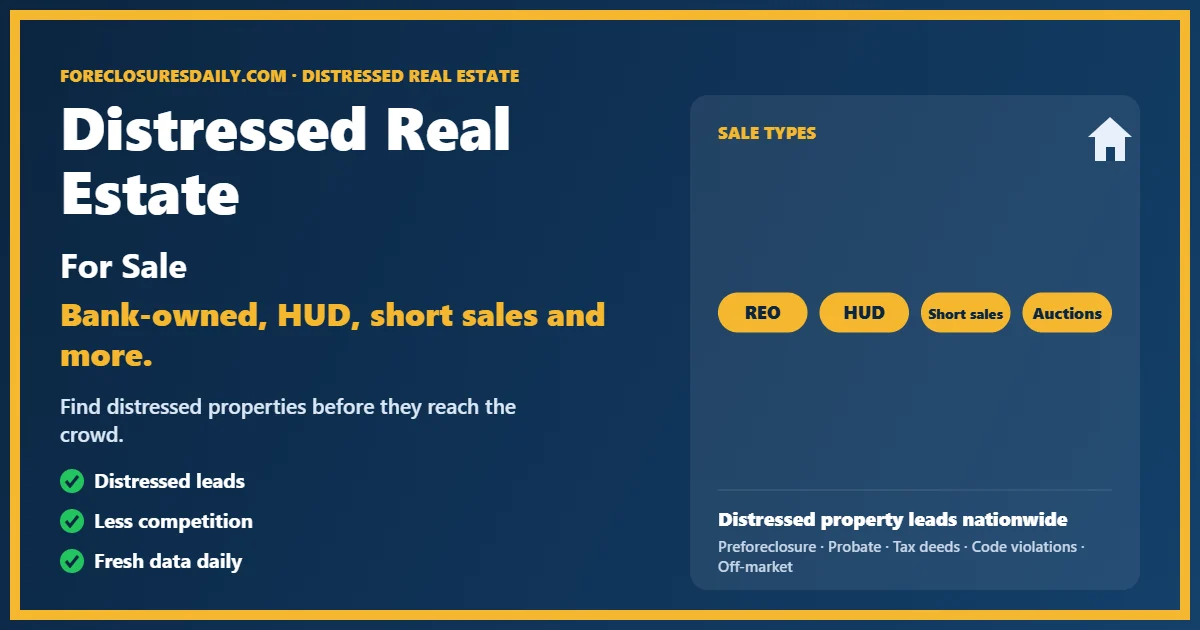
Six kinds of distressed real estate for sale
Each type has its own process, buyer rules and risks.
Bank-owned (REO)
Homes a lender took back after foreclosure. Usually listed with an agent, sold as-is, with lender-approved contracts.
HUD homes
Homes from FHA-insured loans that went to foreclosure. Owner-occupant buyers typically get an early bidding period before investors.
Fannie Mae and Freddie Mac homes
Foreclosed homes from these agencies, often with an initial period reserved for owner-occupant buyers.
Short sales
Sales where the lender agrees to accept less than the loan balance. Approval can take weeks or months.
Foreclosure and tax deed auctions
Public sales, often requiring cash and offering little or no inspection. Title issues are common.
Off-market distressed sales
Preforeclosure, probate and code violation properties bought directly from owners before they list.
Rules for each program change over time. Always confirm current terms before you bid or offer. Many buyers specialize in one or two sale types, learn the rules well and build relationships with the agents, trustees or owners involved.

Listed and sold 25 properties and personally bought and sold four fix-and-flip properties, all generated from probate leads.
Carolynn Castillo
Realtor & Broker · eXp Realty
What to check before buying distressed property
Distressed properties can offer good prices, but they come with risks that retail buyers rarely face. The type of sale shapes what you can learn before you buy. A listed bank-owned home may allow inspections, while a courthouse auction may allow only a drive-by look, so match your offer to the information you have.
As-is sales and hidden damage
Most distressed homes are sold as-is. Vacant homes may have water damage, mold, missing systems or vandalism.
- As-is
- Inspections
Inspect whenever you can, and budget for surprises when you cannot.
Liens and title problems
Auctions and tax deed sales can leave liens, back taxes or ownership questions. Some liens survive certain sales.
- Liens
- Title insurance
Run a title search and get advice before bidding.
Occupied properties
Some foreclosed or auction homes are still occupied. Removing occupants follows legal steps and takes time.
- Occupancy
- Legal process
Learn local rules before buying an occupied home.
Financing limits
Lenders may not finance homes in poor condition. Cash, renovation loans or hard-money loans are common for distressed purchases.
Line up financing that fits the property’s condition.
Questions before buying distressed real estate
- 1What type of distressed sale is this?
- 2Can you inspect before buying?
- 3What does the title search show?
- 4Is the property occupied?
- 5What will repairs really cost?
- 6What do repaired homes nearby sell for?

Shannon Thompson
Investor · Joe Homebuyer of Atlanta
Watch Shannon Thompson share their experience using ForeclosuresDaily.com.
Why distressed property can be a good buy
Distressed sellers, whether lenders, agencies or owners under pressure, often value speed and certainty over top price. That can create room for buyers who are prepared to handle repairs, paperwork and risk.
Lenders want to clear foreclosed homes from their books and may price them to sell.
Owners in preforeclosure or probate may accept a lower price for a fast, simple sale.
Auctions can offer the lowest prices, with the highest risk.
Buyers who understand each type can choose deals that fit their skills and budget. Patience and preparation matter more than speed, because the best distressed deals often go to buyers who have done their homework before the opportunity appears.
- Skip title searches
- Ignore occupancy
- Underestimate repairs
- Run title searches
- Confirm occupancy
- Get repair bids
Related resources

Andrew Litchfield
Webinar host
Andrew Litchfield hosted a ForeclosuresDaily.com monthly webinar for real estate investors.
What buyers search for in distressed real estate
Fixer-upper homes for sale draw about 27,100 searches a month and HUD homes for sale about 14,800. Bank-owned homes for sale draw about 4,400. Listed distressed homes draw many buyers, which is why off-market sources matter.
Auctions draw interest
Foreclosure auctions draw about 2,900 searches a month and tax deed sales about 1,900.
Short sales remain popular
Short sale homes and REO properties each draw about 2,400 searches a month.
Agency programs are well known
HomePath Fannie Mae draws about 1,300 searches a month.
- 1Fixer-upper homes for saleAbout 27,100
- 2HUD homes for saleAbout 14,800
- 3Bank-owned homes for saleAbout 4,400
- 4Foreclosure auctionsAbout 2,900
- 5Short sale homesAbout 2,400
- 6REO propertiesAbout 2,400
- 7Tax deed salesAbout 1,900
- 8Distressed properties for saleAbout 1,300
What this means for buyers
Listed distressed homes draw crowds:
Search volumes are approximate. Figures are recent national monthly estimates and change over time. Use them to understand interest, not as exact counts.
ForeclosuresDaily.com hosts monthly webinars with investors such as Carolynn Castillo, who share how they find and evaluate deals.

Anthony Coletti
Real estate investor
Watch Anthony Coletti share their experience using ForeclosuresDaily.com.
Where to find distressed real estate for sale
- 1
Listed distressed homes
Search the MLS and agency sites for bank-owned, HUD and agency-owned homes. Work with an agent who knows each program’s rules and deadlines.
- 2
Auctions and tax sales
County and online auctions sell foreclosures and tax deeds. Study the rules, deposits and title risks before bidding.
- 3
Off-market owners
Preforeclosure, probate, code violation and tax delinquent leads reach owners before their homes become REO or go to auction, often with less competition. These conversations also let you help owners understand their options while there is still time.
Before you buy
- Identify the sale type
- Read program rules
- Run a title search
- Inspect if allowed
- Pull recent comparable sales
- Line up funds
See also off-market cash buyer and discounted houses for sale.

Jeremy Resmer
Webinar host
Jeremy Resmer hosted a ForeclosuresDaily.com monthly webinar for real estate investors.
Running the numbers on a distressed purchase
Start with the after-repair value and work backward. Distressed homes often need more work than expected, so build in a cushion. Get contractor bids whenever you can, confirm the after-repair value with at least three recent sales of similar repaired homes nearby, and include closing costs, utilities, insurance and taxes for every month you expect to hold the property.
Profit = After-repair value − Purchase, repairs, holding and selling costs
Add a contingency for unknown repairs.
About 12.5% of the resale price. If the home had hidden water damage or a title problem, profit could disappear, so inspect and research first.
Contingencies protect you
Add 10% to 15% to repair budgets on vacant homes.
Time costs money
Agency and lender approvals can take weeks.
Auctions are cash-heavy
Have funds ready and know the deposit rules.
Comps decide value
Use recent sales of repaired homes nearby.

Antonio Stringfield
Probate investor · Los Angeles
Watch Antonio Stringfield share their experience using ForeclosuresDaily.com.

Nancy Wallace-Laab
Investor · nearly 20 years
Nancy focuses on the best outcome for both the seller and the investor, drawing on nearly 20 years of real estate investing experience.

Phillip Warrick
Full-time investor since 2003
Full-time real estate investor since 2003, with over 20 years of experience.
Distressed real estate for sale: FAQ
Short answers about buying distressed real estate. This is general information, and program rules change. Tap a question to open it.
QWhat is distressed real estate?Yes
Property sold under financial or physical pressure, such as foreclosures and short sales.
QWhat is an REO property?
A home owned by a lender after foreclosure.
QCan investors buy HUD homes?
Yes, usually after an owner-occupant priority period.
QAre auction homes cheaper?Yes
Often, but they carry more risk and usually need cash.
QWhat is a short sale?
A sale where the lender accepts less than the loan balance.
QHow can I find deals before they list?
Use preforeclosure, probate and other owner leads.
Want distressed property leads? Tell us your target areas and we will help you choose leads that fit your strategy.
Find distressed real estate before the crowd
Distressed property rewards buyers who understand each sale type, research title and condition, and reach owners early. Start with the sale type you understand best and build from there.
ForeclosuresDaily.com supplies preforeclosure, probate, code violation, absentee owner and tax delinquent leads nationwide. Explore our lead products.