Home Value Estimate Guide: How Absentee and Probate Situations Affect Property Value
Learn how a home value estimate is built, and how absentee ownership and probate delays change what a property is worth.























Hear From Our Customers
Click a profile to watch their video or read their story.






A home value estimate is only as good as the information behind it.
Property value comes down to what a ready buyer will pay, and that price depends on location, condition, use and the surrounding market. A home that is neglected, sitting empty or caught in legal uncertainty can lose both value and usefulness.

Absentee-owned and probate properties are two of the most common examples. This guide explains how property value is determined, why these situations can reduce value, how to build a sound home value estimate, and how investors and professional managers can restore and even increase value.
What determines a property’s value?
Market value is the price a willing buyer and a willing seller would agree on, with both reasonably informed and neither under pressure.
Location matters most: neighborhood, schools, jobs, transportation and nearby amenities. Then come the property’s size, layout, age and condition, and the broader market, including interest rates, inventory and buyer demand.

Use matters too. A home that is lived in, maintained and rented at a fair rate keeps its value and usefulness.
A home left empty or poorly managed can deteriorate quickly, and buyers discount properties that need work, carry legal complications or have a history of problems.




That gap between what a property is worth today and what it could be worth with care is where many investors find opportunity.
Absentee and probate properties often have exactly that kind of gap. For owners, understanding these drivers helps protect an investment. For buyers, it helps separate temporary problems, such as deferred maintenance, from permanent ones, such as a poor location.
How absentee ownership affects property value
Absentee owners live somewhere else. Many manage well, often with a good property manager. But when an owner lives far away and lacks the time, knowledge or help to stay on top of a property, value can erode in predictable ways.



Watch for these warning signs: vacancy, deferred repairs, an overgrown yard, code notices, below-market rent or high turnover, and late or unpaid property taxes.
Professional management protects value. Good property managers help absentee owners keep units occupied, rented at market rates and maintained.
A tired landlord can also be a motivated seller: when management becomes a burden, some absentee owners would rather sell. Investors who can restore the property often see an opportunity where the owner sees a headache.
How probate affects property value
When an owner dies, the property usually passes through probate before it can be transferred or sold. Several common issues can slow the process and affect value along the way.



Many estate homes have significant equity, and heirs often prefer a simple, as-is sale once the court allows it. Investors who understand the process and stay patient can buy at fair prices and restore the property’s value.
Questions to ask before buying a probate property
- Has the court authorized the sale?
- Are all heirs identified and in agreement?
- Is title clear, or what is needed to clear it?
- How long has the home been vacant?
- What repairs are needed now?
- What do restored homes nearby sell for?
How to estimate a home value
Most home valuations begin with comparable sales, meaning recent nearby sales of similar homes adjusted for size, condition, features and location. For a run-down property, estimate both the as-is value and the after-repair value (ARV), and weigh the difference against the repair bill.

Rule of thumb: subtract the as-is value from the after-repair value to find the value gap. Set that gap against your repair costs, then take out holding and selling costs to estimate profit. A healthy gap is what makes a renovation or rental pay.
Treat online estimates as a first look. Automated valuations pulled by address are handy but rarely account for condition, so check them against recent comparables and an inspection. An appraiser or experienced agent gives a more dependable number, especially for estates, legal disputes or unusual homes.
How investors find and restore undervalued properties
Before you buy an undervalued property:
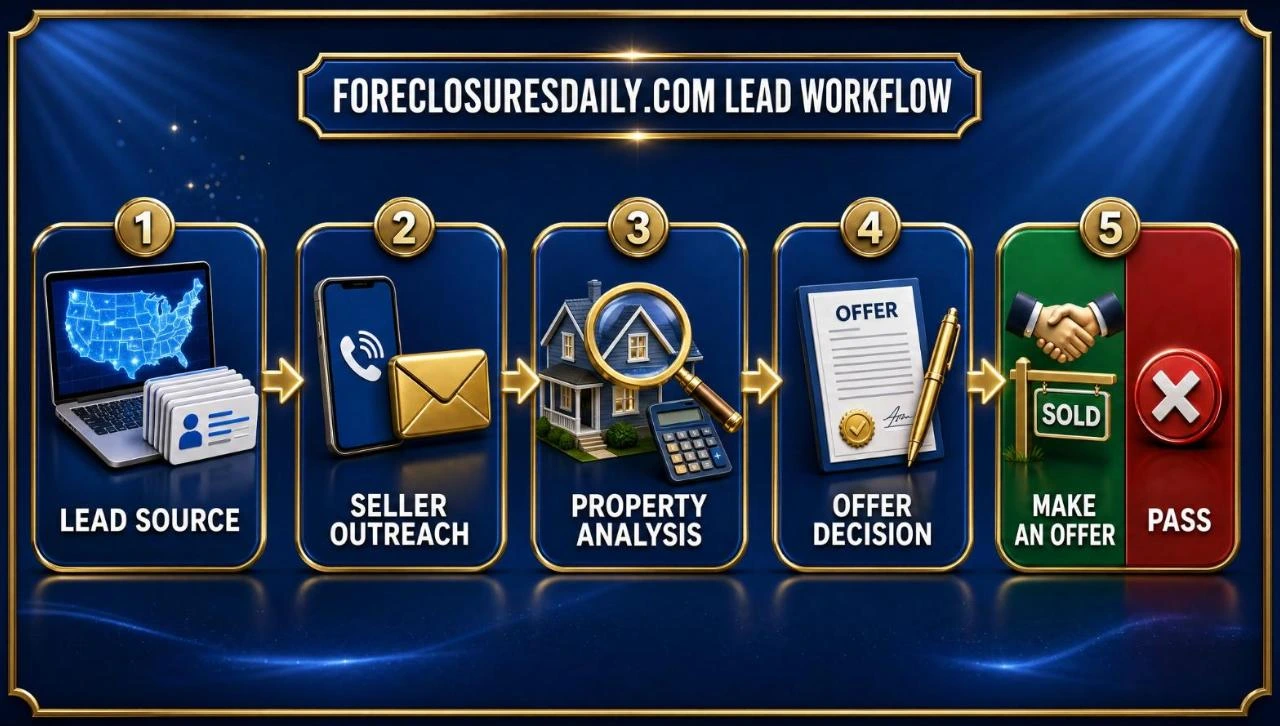
ForeclosuresDaily.com helps investors find these properties before the competition. Since 2004, it has helped investors, wholesalers, flippers and agents reach motivated sellers first.
Its off-market leads cover absentee owner, probate, inheritance and other distress signals nationwide, cross-referenced with tax rolls and property appraiser records, and new records are added every day.
Home value estimate FAQ
 How is property value determined?
Value reflects location, size, condition and features, measured against recent sales of similar homes nearby. Broader market conditions such as interest rates, inventory and buyer demand push prices up or down, so the same house can be worth more or less depending on when it sells.
Can absentee ownership lower value?
Yes, when a distant owner lets maintenance slide, prices the rent wrong or misses local changes. Vacancy, deferred repairs, code notices and late taxes are common results, and buyers discount for each one. A good property manager can prevent most of that erosion.
 What causes an estate home to slip in value during probate?
Probate delays are the usual cause. A missing will, a dispute among heirs or relatives who cannot be located can hold up a sale for months, and the house may sit vacant and unmaintained in the meantime, with leaks, yard neglect and break-ins lowering what buyers will pay.
 Are online value estimates accurate?
Only roughly. Automated estimates rarely see the inside of a house, so they miss condition, updates and damage. Check any online figure against recent comparable sales, and get an inspection or a formal appraisal before you rely on a number for an offer or a loan.
What is after-repair value?
After-repair value is what a property should be worth once the needed repairs and updates are done. It is estimated from recent sales of comparable renovated homes nearby, and investors use it to decide how much they can pay and still make a profit.
How do investors add value?
They buy neglected properties at fair prices, renovate them and then manage or resell them well. Fixing deferred maintenance, filling vacancies and setting rent at market rates all close the gap between what the property was worth and what it can be worth.
Knowing how property values work helps owners protect what they hold and helps investors spot real opportunities. Absentee and probate homes often carry value gaps that patient buyers can close through repairs, steady management and time.
Locate properties ready for a value turnaround
Explore absentee owner and probate leads nationwide, updated daily.