How to Find Distressed Properties: 8 Proven Strategies for Real Estate Investors
Learn how to find distressed properties and where motivated sellers are hiding. Then see how to approach them, from foreclosure and probate records to driving for dollars and off-market lead platforms.
























Hear From Our Customers
Click a profile to watch their video or read their story.






What turns a property into a distressed one?
A distressed property is one where money trouble, a legal process or personal upheaval is pressing on the owner, or where the house has deteriorated and the owner cannot or will not repair it. Typical examples are foreclosures and preforeclosures, inherited houses, homes caught in a divorce and estates in probate.
In addition, back taxes, code violations, long vacancies and worn-out landlords are other common signals. As a result, owners in these spots often want to sell fast.
They might face a court or tax deadline, live in another state, lack cash for repairs or simply want a hard chapter behind them. Investors who can promise speed, certainty and an as-is purchase are well placed to help.

Distressed does not always mean damaged, and it never means desperate. In fact, plenty of distressed homes are in fine shape because the pressure sits on the owner, not the building. Treat each seller with respect and make offers that solve a real problem.
Find distressed properties through relationships, public records and legwork
The first four strategies combine relationships, public records and old-fashioned legwork. Each one finds a different kind of distressed property, and together they give you a broad view of your market.
 1. Networking and relationshipsFirst, connect with agents, brokers, attorneys and other investors. Also, attend local real estate groups and online forums. In fact, relationships can give you early access to deals before they reach the public.See verified leads2. Monitoring foreclosure activityForeclosure and preforeclosure filings point to owners facing financial distress. Then use ForeclosuresDaily.com, public records and auction announcements to act quickly.See foreclosure leads
 3. Probate court recordsSimilarly, estates often need to sell real estate. For example, court records reveal upcoming sales, and estate attorneys or probate lead services make the data easier to work with.See probate leads
 4. Driving for dollarsNext, drive target neighborhoods and look for signs of neglect: overgrown lawns, boarded windows, piled-up mail, roof damage, code violation stickers and a vacant feel. Then record each address and look up the owner to turn the sighting into a lead.See code violation leads

Above all, combine signals for the best leads. A neglected house that also appears in a probate or foreclosure record is usually a stronger lead than either signal alone.
Auctions, wholesalers, online groups and lead platforms
The next four strategies widen your reach, from competitive auctions to data that delivers motivated owners to your inbox.
Two habits support every strategy. First, county tax, code enforcement and court records reveal distress signals for free if you have time to search. Then, targeted letters to owners with those signals turn data into conversations.
5. AuctionsSimilarly, foreclosure, tax lien and other auctions can offer below-market prices. Research titles, liens and condition first, and expect fast, competitive bidding.See foreclosure leads6. WholesalersIn addition, wholesalers specialize in finding distressed properties and negotiating deals. As a result, good relationships can bring a steady flow of opportunities.See verified leads 7. Social media and online groupsLikewise, real estate investor groups, local forums and social platforms surface owners and deals that never reach the MLS.Look up owners
 8. Lead platformsFinally, ForeclosuresDaily.com gathers distress signals nationwide and cross-references them with tax rolls and property appraiser records. For instance, lead types include probate, pre-probate, inheritance, foreclosure, divorce, eviction, code violation, tax delinquency and absentee owner leads.See pre-probate leads
Check every lead before you make an offer
Screen each lead, contact the owner with courtesy and log every conversation. Run through these checks before any offer:
- First, confirm ownership and liens.
- Next, check taxes and legal status.
- Then inspect or estimate repairs.
- After that, pull comparable sales.
- Also, know your exit strategy.
- Finally, make a fair, clear offer.
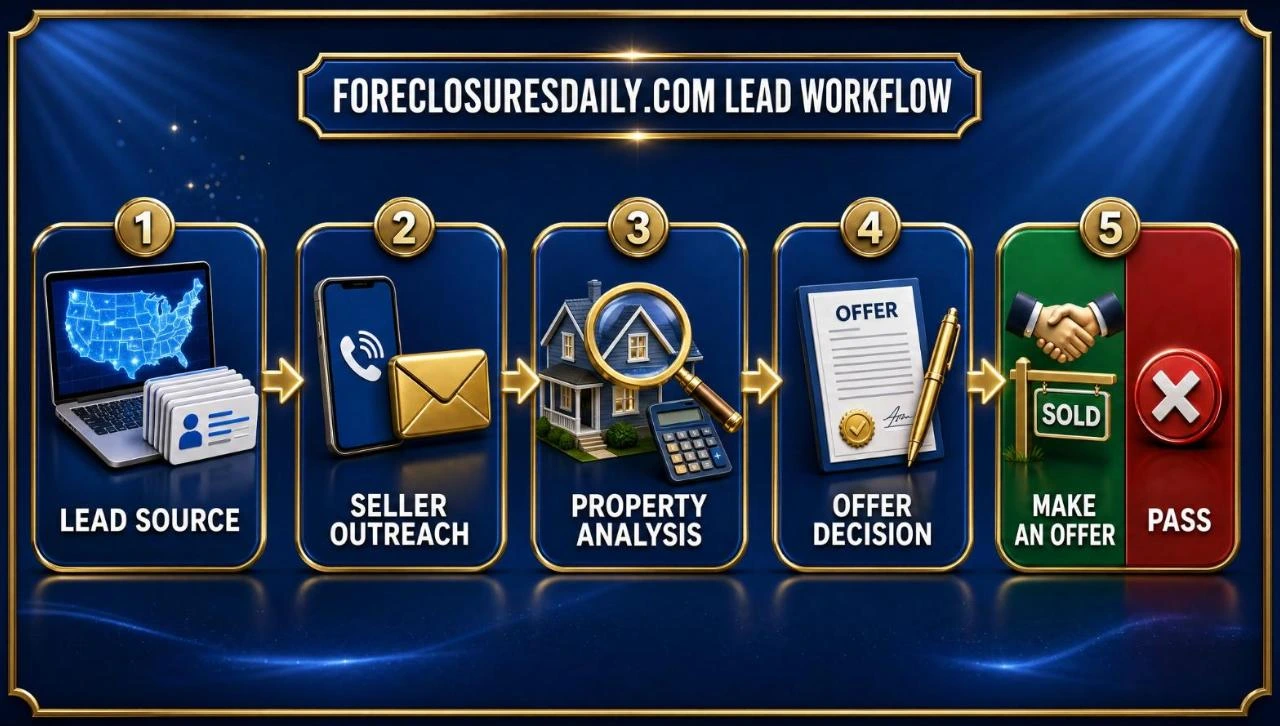

Roof, plumbing, wiring and foundation defects often hide in distressed houses, so an inspection and contractor bids keep your budget honest. Foreclosure deadlines, probate authority, liens and unpaid taxes can each change whether a closing happens and when.
Above all, confirm title, liens and taxes before you sign anything.
How to approach distressed property owners
Spotting the right house gets you halfway there. However, your approach to the owner decides whether a conversation ever starts.
The owner may be grieving, short on money or caught in a family dispute. Then introduce yourself honestly and lead with how you can help.
A quick closing, buying as-is or a flexible move-out date can outweigh price for these owners. Spell out how your offer works and the reasoning behind it.
Still, many owners are not ready at first. Patient, respectful follow-up over time wins deals. Respect every opt-out request.

Before you reach out, learn what the owner needs: what is prompting the sale, what timeline works, what condition the home is in, whether anyone is living there, whether there are loans or liens, and what a good outcome looks like.
In short, investors lose deals by being pushy, making unrealistic offers or failing to follow up. Fair offers backed by clear numbers build trust and referrals.
A simple plan to start finding distressed properties
- Pick your market.
Choose a few ZIP codes where you know values and can act quickly.
- Use several sources.
Combine networking, public records, driving for dollars and lead data.
- Evaluate and follow up.
Evaluate each property, contact owners courteously and record where every lead stands.
Why off-market properties are worth pursuing
Since 2004, ForeclosuresDaily.com has put investors, wholesalers, flippers and agents in touch with motivated sellers ahead of the crowd. Off-market buying offers three advantages:
Homes can be sold privately, before any listing.
Also, fewer buyers know the property exists.
New records are added every day, and you can target any county or ZIP code.

ForeclosuresDaily.com also hosts monthly webinars for investors. Phillip Warrick, a full-time investor since 2003, has shared how he finds distressed properties.
Distressed property search: FAQ

What counts as a distressed property?
A distressed property is one where financial, legal or personal pressure weighs on the owner, such as foreclosure, probate, divorce or delinquent taxes, or a house in poor repair. The distress can sit with the owner even when the building itself is sound.
Which methods find distressed properties most often?
In general, no single channel is enough. Investors who find steady deals mix several: off-market lead platforms, county public records, networking with agents and attorneys, driving for dollars, auctions and other wholesalers. Combining signals, such as a neglected house that is also in probate, usually produces the strongest leads.

Are distressed properties always cheap?
Not always. Some sell at a real discount, but repairs, liens, back taxes and holding costs can erase it. Therefore, only a careful look at after-repair value, repair bids and title shows whether a distressed property is actually a good deal.
Is buying at auction risky?
It can be. Auction buyers often get little or no chance to inspect, and some liens may survive the sale. Research title, liens and condition beforehand, set a firm maximum bid and walk away when bidding passes it.
How should I contact distressed owners?
With honest, respectful outreach. Lead with empathy, offer real solutions and respect every opt-out request.
Find off-market deals before your competition
Access foreclosure, probate, divorce and tax-delinquency leads nationwide, with new records added every day.
