Probate attorney and real estate investor: how to work together fairly on estate property sales
When a homeowner dies, the probate attorney often becomes the person who knows most about the estate’s property: who the executor is, whether a sale needs court approval, what liens exist and what the family wants. For real estate investors, building respectful, professional relationships with probate attorneys can lead to better information and smoother closings.
That relationship has limits. Probate attorneys owe duties to their clients, usually the executor and the estate, and professional ethics rules generally restrict paying lawyers for referrals. This guide explains the attorney’s role, how investors can add real value to an estate sale, and how to stay within the rules. It is general information, not legal advice.
What families search for when an estate includes a home
Probate attorney draws about 27,100 searches a month in the US and estate attorney about 14,800. Probate lawyer near me draws about 6,600.
Executors look for direction
Executor of estate draws about 8,100 searches a month and letters testamentary about 6,600.
Costs are a concern
Probate attorney fees draw about 880 searches a month and probate attorney cost about 720.
Real estate is often the main asset
Real estate probate attorney draws about 260 searches a month.
- 1Probate attorneyAbout 27,100
- 2Estate attorneyAbout 14,800
- 3Executor of estateAbout 8,100
- 4Probate lawyer near meAbout 6,600
- 5Letters testamentaryAbout 6,600
- 6Probate attorney feesAbout 880
- 7Probate attorney costAbout 720
- 8Real estate probate attorneyAbout 260
Where investors can help
Practical value for estates:
Search volumes are approximate. Figures are recent monthly US estimates and change over time. Use them to understand interest, not as exact counts.
ForeclosuresDaily.com hosts monthly webinars with investors such as Carolynn Castillo, who share how they find and evaluate deals.
How investors can build good relationships with probate attorneys
- 1
Be a resource, not a pitch
Offer useful information such as local repair costs, cleanout vendors and realistic as-is values. Attorneys value professionals who make estates easier to settle.
- 2
Respect who the client is
The attorney represents the executor or estate, not you. Send offers through the executor or with the attorney’s permission, in clear writing.
- 3
Follow the ethics rules
Do not offer or pay referral fees to attorneys; professional rules generally prohibit it. Compete on price, terms and reliability instead.
Checklist
- Confirm executor authority
- Ask about court approval
- Verify liens and mortgage
- Inspect the property
- Put terms in writing
- Encourage independent advice
See also probate wholesale investments and tips for buying probate properties.
What a probate attorney does in a real estate sale
Duties vary by state and by estate. These are common patterns, not legal advice. Investors who understand these steps can time their offers well, avoid wasted effort before letters issue, and answer the attorney’s questions quickly. That reliability matters: attorneys and executors remember the buyers who closed when they said they would, at the price they offered, without last-minute changes.
Opening the estate
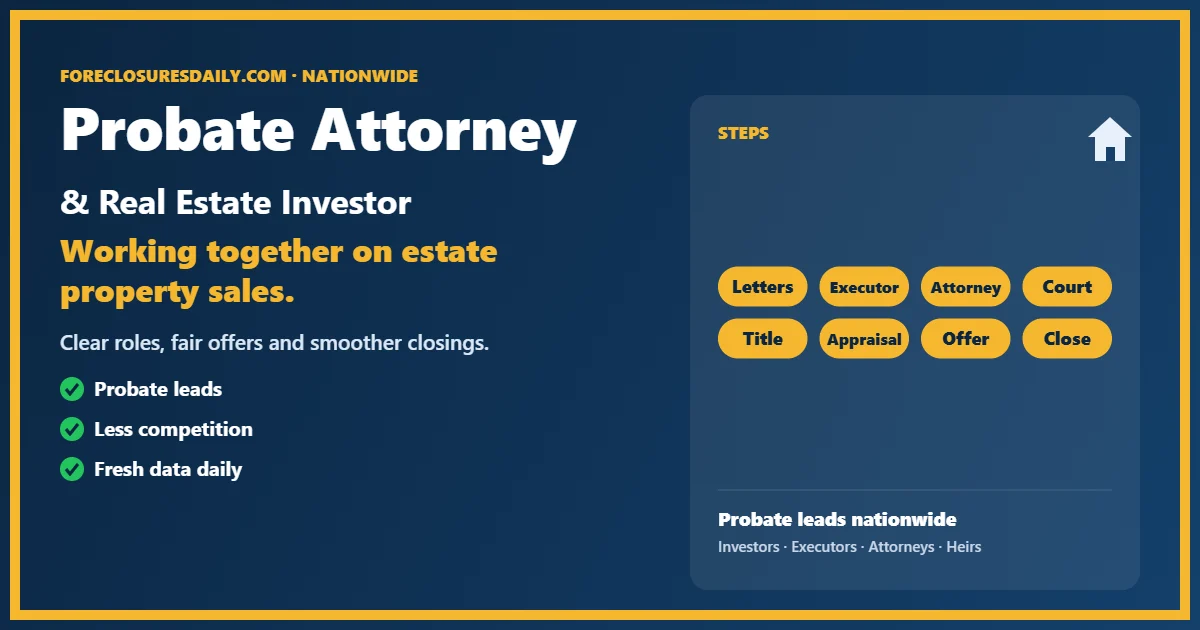
The attorney helps the executor file the will, obtain letters testamentary or letters of administration, and notify heirs and creditors. Until letters issue, no one can usually sign a sale contract for the estate.
- Letters
- Notice to heirs
Confirm letters before you negotiate.
Reviewing contracts and court approval
The attorney often reviews purchase contracts, advises whether court approval is required, and in some states schedules a confirmation hearing where higher bids may be heard.
- Contract review
- Confirmation
Plan for possible overbids.
Clearing title and distributing proceeds
The attorney works with the title company to clear liens, pay estate debts from proceeds and distribute what remains to heirs under the will or state law.
- Title
- Distribution
Closings can take longer than standard sales.
Fees and fair dealing
Probate attorneys may charge hourly, flat or, in a few states such as California, statutory fees based on the estate’s value. Investors should make offers that leave the estate a fair net after those costs, disclose any plan to assign or resell, and follow federal and state rules for calls and texts.
Fair dealing protects families and your reputation.
Questions an investor can ask (through the executor)
- 1Have letters been issued?
- 2Does the sale need court approval?
- 3Are all heirs in agreement?
- 4Is there a mortgage or lien?
- 5What timeline suits the estate?
- 6Who should receive written offers?
Six professionals in a typical probate property sale
Knowing who does what helps investors communicate clearly and avoid stepping on anyone’s role.
Executor or administrator
Has legal authority to act for the estate once the court issues letters.
Probate attorney
Advises the executor, handles court filings and reviews sale terms.
Probate court
Issues letters and, where required, approves or confirms the sale.
Title company
Clears liens, insures title and handles the closing.
Appraiser
Provides a date-of-death value for tax basis and estate reporting.
Agent or investor
Markets the home or buys it directly, often as-is.
Roles and requirements vary by state. Always confirm who has authority to sign. When in doubt about who can sign or what approvals are needed, ask the executor to confirm with the estate’s attorney before you proceed.
Why probate properties need careful handling
Recent Census estimates put the US median home value near $333,000, with about 65% of homes owner-occupied. For many families, a house is the largest asset in an estate, so its sale shapes what each heir receives.
Executors have legal duties to act in the estate’s best interest.
Heirs may disagree about whether to keep or sell.
Probate filings are public court records in most counties.
Attorneys and courts look for fair prices and clean, documented transactions.
- Offer referral fees to lawyers
- Hide your intent to resell
- Cold-call without scrubbing
- Compete on price and terms
- Disclose your role
- Follow call and text rules
Related resources
Running the numbers on a probate purchase
Run the numbers before you make an offer, and allow for a longer timeline. Probate closings can take weeks or months longer than standard sales, especially when court approval is needed. Because an estate must justify its sale price to heirs and sometimes to a judge, support your offer with recent comparable sales and written repair bids. A well-documented offer is easier to approve and harder to outbid on a whim. Track your cost per closed probate deal every quarter.
Profit = After-repair value − Purchase + repairs + holding and selling costs
All figures are illustrative. Local costs vary widely.
A fair offer helps everyone. When your offer reflects real repair costs and recent sales, attorneys and courts are more likely to approve it and refer future executors your way.
Court timing costs money
Budget for a longer close.
Overbids are possible
Have a ceiling and stick to it.
Repairs drive the number
Get real bids, not guesses.
Track your results
Measure cost per deal by lead type.
What our customers say
Real investors share their experience with ForeclosuresDaily.com in short video reviews and press releases.







Probate attorney and real estate investor: FAQ
Short general answers. This is not legal advice. Tap a question to open it.
QWho does a probate attorney represent?Yes
Usually the executor or the estate, not buyers.
QCan investors pay attorneys for referrals?
Professional ethics rules generally prohibit it.
QDoes every probate sale need court approval?
No. It depends on state law and the executor’s authority.
QWhat are letters testamentary?Yes
Court documents that give the executor authority to act.
QHow should investors send offers?
In writing, through the executor or with the attorney’s permission.
QWhere do investors find probate properties?
Public probate filings in county courts.
Want probate leads? Tell us your target counties and we will help you choose probate leads.
Earn trust with estates and their attorneys
Investors who respect the attorney’s role, make clear written offers and follow through reliably become the buyers estates call again.
ForeclosuresDaily.com supplies probate, pre-probate, preforeclosure and absentee owner leads nationwide. Explore our lead products.