ForeclosuresDaily.com · Probate guide

Probate Real Estate Guide: Key Terms, Timelines and Estate Planning

When someone dies, their home usually passes through probate before it can be sold or transferred.

This guide explains the probate process in plain English, how long it takes, how estate homes are sold, and how investors and agents can respectfully help heirs who want a simple sale.


Get started with ForeclosuresDaily.comHow ForeclosuresDaily.com works
Probate leads Probate Real Estate Guide 3D hero: house with probate papers, keys and for sale sign with updated daily, verified off-market and since 2004 checks
Verified off-market leadsDivorce leadsTargeted real estate lead generationProbate leadsOff the retail gridPre-probate leadsUpdated data before your competitionInheritance leadsNationwide coverageForeclosure leadsLife real estate leadsLis pendens leadsCross-referenced tax rolls and property appraiser recordsEviction leadsCode violation leadsAbsentee owner leadsDistressed homeowner leadsTax late leadsCustom leadsCash buyer leads
The first step to finding real estate before your competition is to identify the owner

Hear From Our Customers

Click a profile to watch their video or read their story.

Shannon Thompson

Shannon ThompsonWatch video
Anthony Coletti

Anthony ColettiWatch video
Joe Creasy

Joe CreasyWatch video
Antonio Stringfield

Antonio StringfieldWatch video
Common questions

What people search for about probate

Updated data before your competition

Monthly U.S. searches show that most people start with basic questions: what probate is, what an executor does, and how long the process takes. This guide answers those questions first.

Get fresh data

The basics

What is probate?

Probate is the legal process for settling a person's estate after they die. A probate court confirms the will (if there is one), appoints someone to manage the estate, and oversees paying debts and passing property to the people who inherit it.

Probate leads

Real estate is often the largest asset in an estate. Until probate gives the executor authority to act, a house usually cannot be sold or retitled. That is why probate timing shapes almost every estate home sale.

See probate leads

Step by step

How the probate process works

  1. Open the estate. The executor or a family member files the will and a petition with the probate court in the county where the person lived.
  2. Appoint the executor. The court confirms the executor or appoints an administrator and issues letters that give them authority.
  3. Notify heirs and creditors. Heirs are informed, and creditors are given a set period to make claims against the estate.
  4. Inventory and value assets. The executor lists the estate's property, often with an appraisal of the home.
  5. Pay debts, taxes, and expenses. Mortgages, final bills, and estate expenses are paid from estate funds, sometimes by selling property.
  6. Sell or transfer the home. The house is sold, or deeded to the heirs, following the will, state law, and any court approval required.
  7. Close the estate. The executor files a final accounting, distributes what remains, and asks the court to close the case.
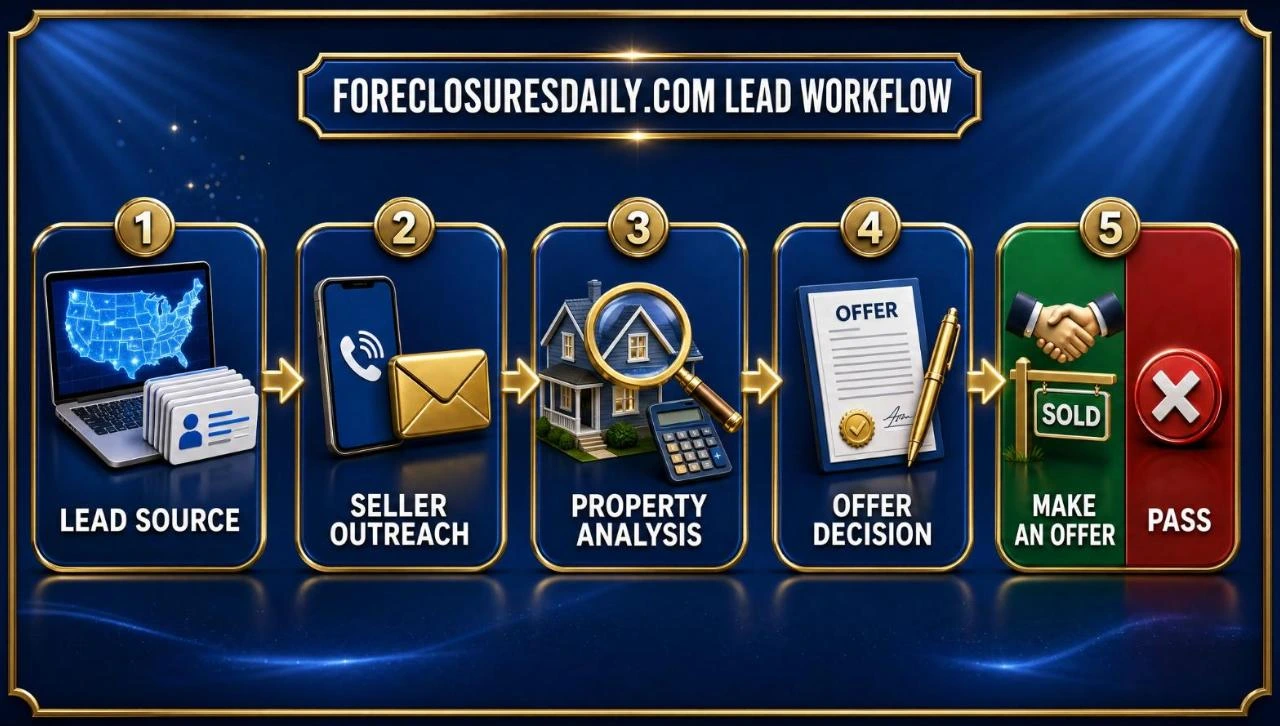
ForeclosuresDaily.com lead workflow: lead source, seller outreach, property analysis, offer decision, make an offer or pass
Timing

Typical probate timelines

Simple estates can close in a few months. Many take nine months to a year, and estates with disputes, missing heirs, unpaid taxes, or property in more than one state can take longer.

Inheritance leads

Common causes of delay include a creditor claim period that must run its course, a will contest, heirs who disagree about selling, and title problems on the house. Carrying costs such as taxes, insurance, utilities, and repairs keep adding up while the home sits.

See inheritance leads

Estate homes

Selling a house in probate

Once the executor has authority, the home can usually be listed or sold directly. Rules differ by state. Some states let executors sell with little court involvement, while others require court approval, a notice period, or a confirmation hearing before the sale closes.

Pre-probate leads

Heirs who inherit a home may also receive a stepped-up tax basis, which can reduce capital gains tax on a sale. A tax professional can explain how this applies to a specific estate.

See pre-probate leads

Planning

How estate planning can simplify probate

Updated data before your competition

Some homes avoid probate entirely.

A living trust, joint ownership with right of survivorship, and transfer-on-death deeds (available in many states) can pass a house directly to the next owner. Even when probate is required, a clear, current will and organized records make the process faster and less stressful for the family.

Get fresh data

For investors and agents

How probate real estate leads work

Probate leads are estates that include real estate.

Many executors and heirs want a fair, simple sale, especially when they live out of state or the home needs work. Agents and investors who reach them early, explain their options clearly, and treat the family with patience are often the ones they choose.

Pre-probate leads

New probate and pre-probate leads go into ForeclosuresDaily.com every day, part of the off-market seller leads we have supplied since 2004. Browse our probate real estate leads or start with a state guide for Texas, Florida, or California.

See pre-probate leads

FAQ

Probate real estate guide: FAQ

Foreclosure leadsWhat is probate in simple terms?
It is the court process that confirms who manages a person's estate after death, pays their debts, and passes their property, including any house, to the people who inherit it.
Updated data before your competitionCan a house be sold during probate?
Yes, once the executor or administrator has legal authority. Some states also require court approval or notice to heirs before the sale can close.
Cross-referenced recordsHow many months does probate usually last?

It ranges from a few months for simple estates to more than a year when there are disputes, debts, or property in several states.
Verified off-market leadsWho pays the mortgage during probate?
The estate usually keeps paying the mortgage, taxes, and insurance from estate funds until the home is sold or transferred. Heirs sometimes cover these costs to protect the property.
Targeted real estate lead generationWhy use ForeclosuresDaily.com for probate leads?
We have supplied off-market seller leads since 2004, including probate, pre-probate, foreclosure, and divorce leads, so investors and agents can reach motivated sellers before the competition.

Nothing in this probate guide is legal or tax advice. Each state sets its own probate rules, so executors and heirs should get advice from a probate attorney where the estate is being handled.

Ready to find probate leads?

Get new probate and pre-probate leads, updated daily, for the counties you work.

Get started with ForeclosuresDaily.comSee ForeclosuresDaily.com lead products