Real estate lending with private money: how it works for borrowers and lenders
Private money real estate lending means borrowing from individuals or private groups instead of a bank. It can approve in days, adapt to unusual deals and fund properties that conventional lenders avoid, which is why so many flippers, wholesalers and landlords rely on it.
























Hear From Our Customers
Click a profile to watch their video or read their story.






How private money real estate lending works
In a private money loan, an individual or private group lends its own funds for a real estate deal, usually secured by the property itself.

Private lenders can be friends, family members, professionals with savings or experienced investors seeking a return. The loan is typically recorded against the property with a mortgage or deed of trust, so the lender can recover their money if the borrower defaults.
Unlike banks, private lenders decide mainly on the property’s value and the borrower’s track record rather than strict credit and income rules. Decisions can come in days, which matters in competitive markets and on auctions or time-sensitive deals.
Most private loans are short term, from a few months to a few years. That suits fix-and-flip projects, wholesale double closes and bridge financing until a property can be refinanced into a longer-term loan.
Because each loan is negotiated, terms vary widely from one lender to another. Two lenders may quote similar rates but very different points, fees, draw schedules and extension terms, so always compare the full offer in writing.
Benefits of private money real estate lending for investors
Private lending fills the gaps left by traditional financing. Here is why investors use it.
Faster approval

Flexible terms

Negotiate structures that fit the project, such as interest-only payments during renovation.
Greater borrowing power

Lenders focus on the property, so imperfect credit or irregular income may not stop a deal.
Unconventional deals

Fund homes in poor condition or with issues banks avoid, as long as the numbers work.
Short terms

Relationships

A lender who trusts you can fund deal after deal as your track record grows.
These benefits come at a cost. Private loans usually carry higher rates and fees than bank loans, so the deal must have enough margin to carry them.
Motivated sellers who need to liquidate fast
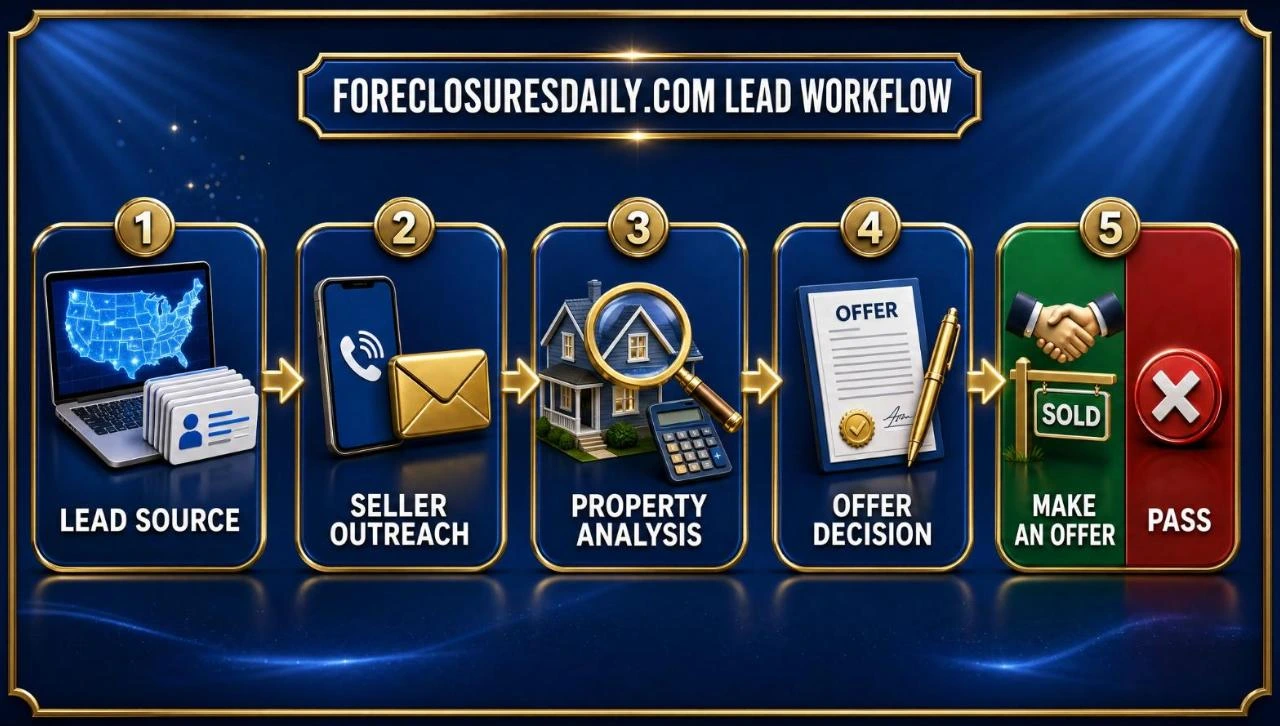
With that in mind, ForeclosuresDaily.com’s off-market real estate platform covers all the major distress signals across the country, cross-checked against tax rolls and property appraiser records.







Understanding the cost of a private money loan
Private loans are priced for speed and flexibility. Expect a higher interest rate than a bank loan plus points, which are upfront fees calculated as a percentage of the loan.
Some loans also carry processing, draw or extension fees. Add everything up before you make an offer.

Cost = Points + fees + Interest for the hold
Subtract this from your projected profit to see whether the deal still works.
Finish faster and the interest portion shrinks.
Protect the lender’s position

Most private lenders want a cushion of equity, so they lend a portion of the purchase price, repairs or after-repair value rather than the full amount. Plan to bring some cash to every deal.
Plan your exit

Lenders want to know how you will repay: resale, refinance or another sale. A clear, realistic exit plan is often the deciding factor in approval.
Becoming a private money lender
Private lending can offer attractive returns secured by real estate, but lenders take real risks and must evaluate every loan carefully.
Higher potential returns
Lenders can negotiate rates that reflect the risk of each deal, often above what traditional savings or bonds pay.
Higher returns come with higher risk; never lend money you cannot afford to have tied up.
Collateral and paperwork
Use a promissory note, a recorded mortgage or deed of trust, title insurance and proper hazard insurance naming you as lender.
Underwriting each deal
Review the property value, repair budget, borrower experience and exit plan, and lend only a safe portion of the value.
Questions lenders should ask
Strong underwriting protects your capital and helps good borrowers succeed.
Borrowers who answer these clearly and honestly are the ones worth funding repeatedly.
Before funding any loan
- 1What is the property worth today and after repairs?
- 2How much is the borrower investing?
- 3What is the borrower’s track record?
- 4What is the exit plan and timeline?
- 5Is title clear and insured?
- 6What happens if the project runs late?
How borrowers can secure private money
Private lending runs on trust. Lenders invest their own capital, so they look for borrowers who are prepared, transparent and reliable. The way you present your first deal sets the tone for every one after it.
Present a clear deal package
Include the purchase price, repair budget and scope, after-repair value with comparables, timeline, exit plan and your experience. Clear numbers build confidence.
Communicate and deliver
Send progress updates, flag problems early and repay on schedule. Reliability turns a single loan into a long-term funding relationship.
- 1Investor meetupsLocal REIA groups
- 2ConferencesIndustry events
- 3Title companiesKnow who funds deals
- 4Attorneys and agentsReferrals to lenders
- 5Your networkFriends, family, colleagues
- 6Approved vendorsLender directories
Deals private lenders like to fund
Lenders are most comfortable with deals that have:
Great deals attract money. The easiest way to raise private money is to bring lenders genuinely good deals. Motivated seller leads help you find properties with the equity lenders want to see.
ForeclosuresDaily.com hosts monthly webinars where investors such as Phillip Warrick discuss financing and finding fundable deals.
A simple process for private money real estate lending
Find a strong deal
Use off-market leads to locate a property with real equity and a clear exit.
Package and pitch
Document and close
Sign a promissory note, record the security instrument, insure the property and close through a title company.
Documents every private loan needs
ForeclosuresDaily off-market opportunities before your competition
Since 2004, investors, wholesalers, flippers, and agents have turned to ForeclosuresDaily.com to reach motivated sellers ahead of the pack.
Private money real estate lending FAQ
What is private money lending?
Borrowing from individuals or private groups, rather than banks, usually secured by the property being purchased.
Is private money the same as hard money?
They overlap. Hard money usually refers to professional lenders focused on the property; private money can include individuals you know.
Why is private money more expensive?
Lenders take more risk and offer speed and flexibility, so rates and points are higher than bank loans.
Can I get private money with bad credit?
Often yes. Many private lenders focus more on the property and your plan than your credit score.
How do private lenders protect themselves?
With a recorded lien, title insurance, hazard insurance and lending only a safe portion of the property’s value.
 Should loan terms be in writing?
Always. Use a promissory note and recorded security instrument reviewed by an attorney.
Related guides: Real Estate Novation: How Novation Agreements Work in Wholesaling, Realtor Alternative: Off-Market Data for Investors Who Want Deals First, Residential Property Leads: How to Generate High-Quality Leads.
Find deals that private lenders want to fund
Private money real estate lending can help you move fast and fund deals banks will not, as long as you respect the costs, document every loan properly and bring lenders solid opportunities.