Understanding property values: how absentee and probate situations affect value
A home’s value comes down to what a ready buyer will pay, and that figure rests on location, condition, how the property is used and the surrounding market.
Neglect, vacancy or a legal cloud over ownership can wear down both what a property is worth and how useful it is.























Hear From Our Customers
Click a profile to watch their video or read their story.






Understanding property values: what determines them
Market value is the price an informed buyer and an informed seller would settle on when neither one is forced to act.

Location carries the most weight, including the neighborhood, school district, job access, transit and nearby amenities. Size, floor plan, age and condition come next, followed by the wider market: interest rates, inventory and buyer demand.
How a home is used also counts. One that is occupied, kept up and rented at a fair rate holds its value and stays useful.
Empty or badly managed homes can decline fast, and buyers mark down any property that needs work, has legal complications or carries a troubled history.
The distance between a property’s current worth and its potential after proper care is where investors look for deals. Absentee-owned and probate homes often show that kind of spread.
For owners, understanding these drivers helps protect an investment. For buyers and investors, it helps separate temporary problems, such as deferred maintenance, from permanent ones, such as a poor location, so they can price each property fairly.
Understanding property values: factors that raise or lower them
Some value drivers are outside an owner’s control; others can be improved with care and investment.
Location

Neighborhood, schools, jobs and amenities set the baseline for value and rarely change quickly.
Condition

Maintenance, updates and repairs have a direct, visible effect on what buyers will pay.
Use and occupancy

Lived-in, well-managed homes hold value better than vacant or poorly managed ones.
Legal status
Market conditions

Income potential

For rentals, accurate rents and low vacancy support higher values.
Owners and investors cannot control the market, but they can control condition, management and legal clarity, which often account for much of the value gap.
Motivated sellers looking to liquidate fast
Because of this, ForeclosuresDaily.com built its off-market real estate platform to cover every major distress signal nationwide, cross-referenced with tax rolls and property appraiser records.



How absentee ownership can affect property value
Absentee properties have legal owners who do not live there. Many absentee owners manage well, often with a good property manager.
Trouble starts when an owner lives far away and lacks the time, know-how or local help to keep up with the property, and value then slips in familiar ways.
Lack of daily maintenance

Real estate needs constant attention. Small leaks, landscaping and wear left unchecked become expensive problems, and visible neglect lowers what buyers and tenants will pay.
Mispriced rent

Owners unfamiliar with the local rental market may ask too much and sit vacant, or too little and attract the wrong tenants. Either way, income and value suffer.
Less local knowledge
Without familiarity with the neighborhood, owners struggle to market the property, explain its strengths or respond to local changes.
- 1VacancyEmpty for long periods
- 2Deferred repairsRoof, plumbing, exterior
- 3Overgrown yardVisible neglect
- 4Code noticesViolations or complaints
- 5Below-market rentOr high turnover
- 6Tax issuesLate or unpaid taxes
How professional management protects value
Good property managers help absentee owners by:

A tired landlord can be a motivated seller. Some absentee owners decide selling beats managing a property that has become a burden. An investor able to restore the home may see a solid deal where the owner sees only a problem.
ForeclosuresDaily.com hosts monthly webinars where investors such as Phillip Warrick discuss evaluating and adding value to distressed properties.
How probate can affect property value
After an owner dies, the home generally goes through probate before anyone can transfer or sell it. Several common problems can drag out that process and hurt the property’s value.
Intestate estates
Without a will, the court applies state law to decide who inherits, and that takes paperwork and time. Decisions about the house can stall until it is settled.
Will contests
Family members sometimes contest a will or disagree about the property. Lengthy disputes can leave a home unmaintained and unsold.
Missing beneficiaries
Locating every heir can be difficult, especially when relatives live far away. Until all parties are identified, the sale may wait.
Why probate properties can still be good opportunities

Estate homes frequently carry substantial equity, and once the court permits a sale, heirs often want a simple as-is deal.
Patient investors who understand probate can buy at fair prices and bring the home back to full value.
Questions before buying a probate property
- 1Has the court authorized the sale?
- 2Are all heirs identified and in agreement?
- 3Is title clear, or what is needed to clear it?
- 4How long has the home been vacant?
- 5What repairs are needed now?
- 6What do restored homes nearby sell for?
Understanding property values: how to estimate one
Most residential valuations start with comparable sales: recent nearby sales of similar homes, adjusted for size, condition, features and location. With a neglected property, estimate the as-is value and the after-repair value, then weigh the difference against the repair cost.

Value gap = After-repair value − As-is value + repairs
A wide enough gap is what justifies a renovation or a rental purchase.
Subtract holding and selling costs to estimate profit.
Online estimates are a start
Automated value estimates by address are convenient, but they often miss condition. Always confirm with recent comparables and an inspection.
Use professionals when it matters
Licensed appraisers and seasoned agents give more dependable values, particularly for estates, legal disputes and unusual properties.
How investors find and restore undervalued properties
Find the opportunities
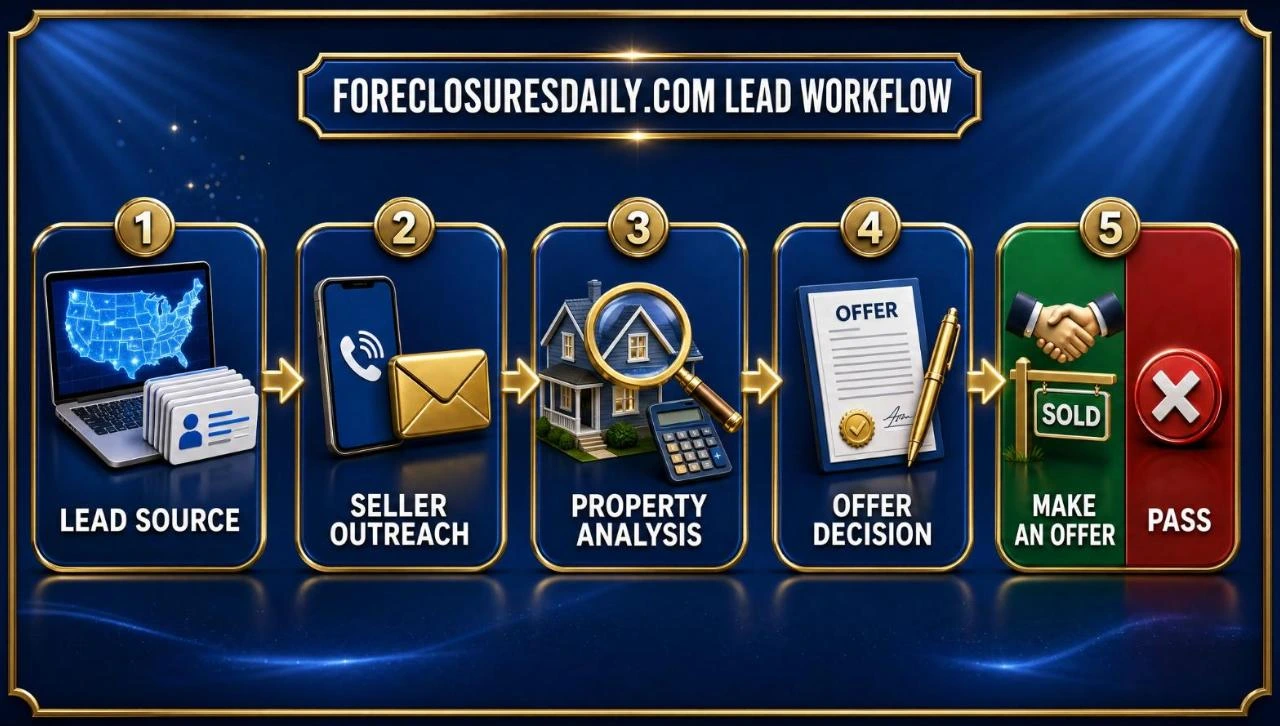
Use absentee owner, probate and inheritance leads to identify properties where value has slipped and owners may want to sell.
Analyze carefully
Estimate as-is value, repairs and after-repair value, and confirm title and legal status before making an offer.
Restore and manage
Renovate to the neighborhood standard, set fair rents or resell, and maintain the property to protect its value.
Before you buy an undervalued property
ForeclosuresDaily off-market opportunities before your competition
In fact, investors, wholesalers, flippers, and agents have used ForeclosuresDaily.com since 2004 to reach motivated sellers before anyone else.
Understanding property values: FAQ
 How is property value determined?
A property’s value comes from its location, size, condition and features, measured against recent sales of similar homes nearby. Broader conditions such as interest rates, inventory and buyer demand then push that figure up or down across the area.
Can absentee ownership lower value?
Yes, when the home goes without regular upkeep, the rent is set too high or too low, or the owner lacks local knowledge. Those gaps lead to vacancy, deferred repairs and visible neglect, all of which buyers and tenants discount.
 What makes some probate homes lose value?
Probate can take months when there is no will, heirs disagree or some heirs are hard to locate. During that time the house may sit empty with no one paying for repairs, and vacancy plus deferred maintenance pulls the value down.
Are online value estimates accurate?
Treat them as a rough first look. Automated estimates often miss condition, so check the number against recent comparable sales, walk the property or order an inspection, and get an appraisal when the stakes are high.
What is after-repair value?
After-repair value is what a property should sell for once the needed repairs and updates are done. It is estimated from recent sales of similar homes that have already been renovated, and investors use it to set offers.
 How do investors add value?
They buy neglected properties at fair prices, renovate them to the neighborhood standard, and then rent them at market rates or resell them. Good management after the work is done protects the value they added.
Related guides: Wholesale Real Estate Investment vs REITs: Active and Passive Ways to Invest, What Is Real Estate Lis Pendens? Meaning, Effects and Investor Opportunities, Wholesale Houses for Sale: How to Find, Evaluate and Buy Below Market.
Locate homes with value you can bring back
Knowing what drives value helps owners protect what they have and helps investors spot opportunity. Absentee and probate homes often carry value gaps that patient buyers can close with repairs, steady management and time.