The art of negotiating with absentee homeowners
Negotiating with absentee homeowners is a skill every off-market investor and agent should build. These owners do not live in the property, which often means they are less attached to it, less familiar with its current condition and more open to a simple, convenient sale.
























Hear From Our Customers
Click a profile to watch their video or read their story.






Understanding absentee homeowners
An absentee homeowner owns a property but does not live in it. They may have moved away, rent the home out, hold it as an investment or have inherited it.

Common examples include owners who relocated for work or retirement, landlords with one or two rentals, heirs who received a house in another city and owners of second or seasonal homes. Some manage well with help; others find long-distance ownership a growing burden.
Because absentee properties are often not listed on the MLS, they offer off-market opportunities. When an owner wants to exit quickly, a buyer who can make the process easy has a real advantage.
Absentee does not automatically mean motivated. Your job is to find out whether the owner has a reason to sell now and what would make a sale attractive to them.
Absentee owners are found across every market, from city rentals to suburban homes and rural properties. Public records that list a mailing address different from the property address are one of the simplest ways to identify them.
Why absentee homeowners decide to sell
Understanding motivation is the foundation of every good negotiation. These are the most common reasons absentee owners sell.
Financial goals

Investors may sell once they reach a target profit or want to redeploy capital elsewhere.
Maintenance burden

Managing repairs from afar is stressful and costly, especially as a property ages.
Tenant problems
Distance and time

Owners who moved away may lack time to visit, oversee contractors or handle emergencies.
Inherited property

Heirs may prefer cash to managing a house they never planned to own.
Life changes

Retirement, divorce or new priorities can make a distant property feel like a distraction.
Ask open questions and listen. The owner will usually tell you which of these matters most, and that tells you how to structure your offer.
Sellers motivated to liquidate quickly
That is why ForeclosuresDaily.com’s off-market real estate platform tracks every major distress signal nationwide and cross-references it with tax rolls and property appraiser records.




Research before negotiating with absentee homeowners
Good negotiations start long before the first conversation. Absentee owners may not know the property’s current condition or local values, so the more prepared you are, the more credible and helpful you become.
Know the property

Drive by or have someone check the exterior, review photos and public records, and estimate repairs. Note anything the owner may not be aware of.
Know the market

Pull recent comparable sales and rents nearby so you can explain values clearly and fairly.
Know the owner
Confirm ownership, how long they have owned it, where they live and whether there are liens, tax issues or evictions.
- 1OwnershipOwner of record and mailing address
- 2TenureYears owned and likely equity
- 3ConditionExterior and visible repairs
- 4OccupancyVacant or rented
- 5TaxesCurrent or delinquent
- 6ComparablesRecent nearby sales
Build trust from a distance
Remote sellers respond to buyers who:

Transparency closes deals. When an owner cannot see the property for themselves, your honesty about its condition and value is what earns their trust.
ForeclosuresDaily.com hosts monthly webinars where investors such as Phillip Warrick share negotiation and outreach strategies.
Strategies for negotiating with absentee homeowners
The best deals solve the owner’s problem. Focus on convenience, certainty and fairness, not just price.
Make it easy
Offer to buy as-is, handle cleanout, coordinate with tenants and arrange remote signing and closing.
Reduce risk
Show proof of funds, keep contingencies simple and commit to a firm closing date.
Offer options
Present a cash price and, where appropriate, alternatives such as a later closing, a tenant-occupied purchase or seller financing.
Anchor with facts, not pressure

Share comparable sales and repair estimates so the owner understands your number. Fact-based offers feel fair and reduce back-and-forth.
Never misrepresent condition or value; your reputation depends on it.
Uncover what the owner needs
- 1How often do you visit the property?
- 2What has been the hardest part of owning it?
- 3Are there tenants, and how is that going?
- 4What would you do with the sale proceeds?
- 5How soon would you like to close?
- 6What would make this an easy decision?
Structuring a fair offer for an absentee property
Start with the after-repair value and work backward. Deduct repairs, carrying costs, selling costs and your profit margin. Then set that figure beside what listing would cost a distant owner: fixing the house, months of taxes and utilities, commissions and the hassle of selling from out of town.

Offer = ARV × 70% − Repairs
Adjust for tenants, condition and local competition.
Show the owner how you reached the number.
Compare with their alternative
Help the owner see the full cost of listing from a distance: repairs, vacancy, utilities, taxes, commissions and time. A clean, quick sale often nets closer than it first appears.
Leave room for both sides
A fair deal leaves the owner satisfied and you profitable. Squeezing too hard can lose the deal or your reputation.
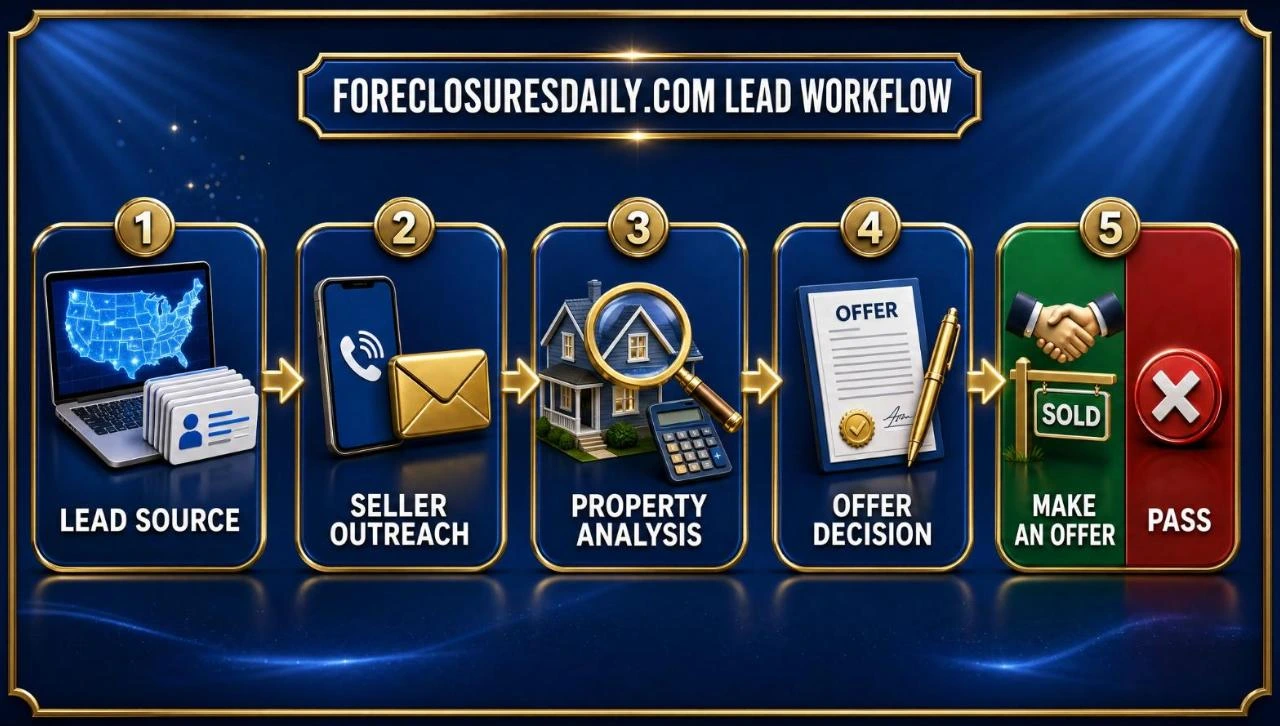
Negotiating with absentee homeowners: from lead to closed deal
Find and verify
Pull absentee owner leads, verify ownership and mailing addresses and skip trace current contact details.
Reach out and listen
Send a clear letter, follow up through permitted channels and learn the owner’s goals before you talk price.
Offer, negotiate and close
Present a fair, well-explained offer with flexible options, then close quickly through a reputable title company.
Before you send an offer

Find absentee owners in your market with absentee owner leads and reach them with our skip tracing guide.
ForeclosuresDaily off-market opportunities before your competition
Indeed, ForeclosuresDaily.com has been helping investors, wholesalers, flippers, and agents be first to motivated sellers since 2004.
Negotiating with absentee homeowners: FAQ
What is an absentee homeowner?
An owner who does not live in the property, such as a landlord, an heir, a second-home owner or someone who moved away.
Are absentee owners always motivated to sell?
No. Some are happy owners. Research and conversation reveal whether there is a reason to sell now.
What matters most to absentee sellers?
Often convenience and certainty: an as-is sale, minimal travel and a reliable closing.
Can I purchase an absentee-owned rental with tenants still living there?
Yes, many investors do. Review leases and tenant rights carefully first.
How do I find absentee owners?
Absentee owner lead lists, public records that show out-of-area mailing addresses and driving for dollars.
 Should I explain my offer?
Yes. Showing comparables and repair estimates builds trust and makes your offer feel fair.
Related guides: Top Platforms for Finding Probate Leads: How to Compare Your Options, Off-Market Property Travis County: East Austin, Dove Springs and Del Valle Deals, Understanding Property Values: How Absentee and Probate Situations Affect Value.
Negotiate better deals with absentee homeowners
The art of negotiating with absentee homeowners comes down to preparation, empathy and fairness. Understand why they want to sell, make the process easy and back every offer with clear facts.