Investor rental income: a practical guide to rental property investment
Rental property investment can create monthly income, long-term appreciation and real tax advantages. It also takes planning: choosing the right property type, running honest numbers, managing tenants and protecting yourself against vacancies and repairs.
























Hear From Our Customers
Click a profile to watch their video or read their story.






Is rental property a good investment?
A rental property produces income when rent exceeds the full cost of owning and operating it, while the property itself can grow in value over time.

For many investors, the answer is yes, as long as the numbers work. A well-bought rental in a stable area can pay its own mortgage, produce monthly cash flow and build equity as the loan is paid down and the property appreciates.
The key phrase is well-bought. Paying too much, underestimating repairs or ignoring vacancy can turn a promising rental into a monthly expense. That is why experienced landlords focus on buying below market and analyzing every cost before they commit.
Rental income is often called passive, but it is better described as low-maintenance once systems are in place. Tenant screening, maintenance and bookkeeping still need attention, whether you handle them yourself or hire a property manager.
Location drives almost everything in rental investing. Look for areas with steady jobs, good schools, convenient transportation and reasonable property taxes, because those factors attract reliable tenants and support rents over the long term.
Types of rental property investment to consider
Different property types produce income in different ways. Match the type to your goals, budget and how hands-on you want to be.
Residential rentals
Single-family homes, townhouses, apartments and condos rented to individuals or families. They offer stable income and long-term appreciation.

Commercial and vacation rentals
Commercial property often brings higher yields and longer leases but costs more and needs more expertise. Vacation rentals can earn more in peak seasons but require hands-on management and marketing.
REITs and fix-and-flip
REITs let you invest passively through shares with diversification and liquidity. Fix-and-flip produces lump-sum profits rather than rental income, with higher risk and reward.
Choose your strategy first

Understanding the options helps you focus your research and avoid buying a property that does not fit your goals or risk tolerance.
Conduct thorough research on your chosen property type and market before you make an offer.
Questions before buying a rental
- 1What do similar homes rent for?
- 2What are taxes, insurance and HOA fees?
- 3What repairs does it need now?
- 4How strong is local rental demand?
- 5What vacancy should you plan for?
- 6Will you self-manage or hire a manager?
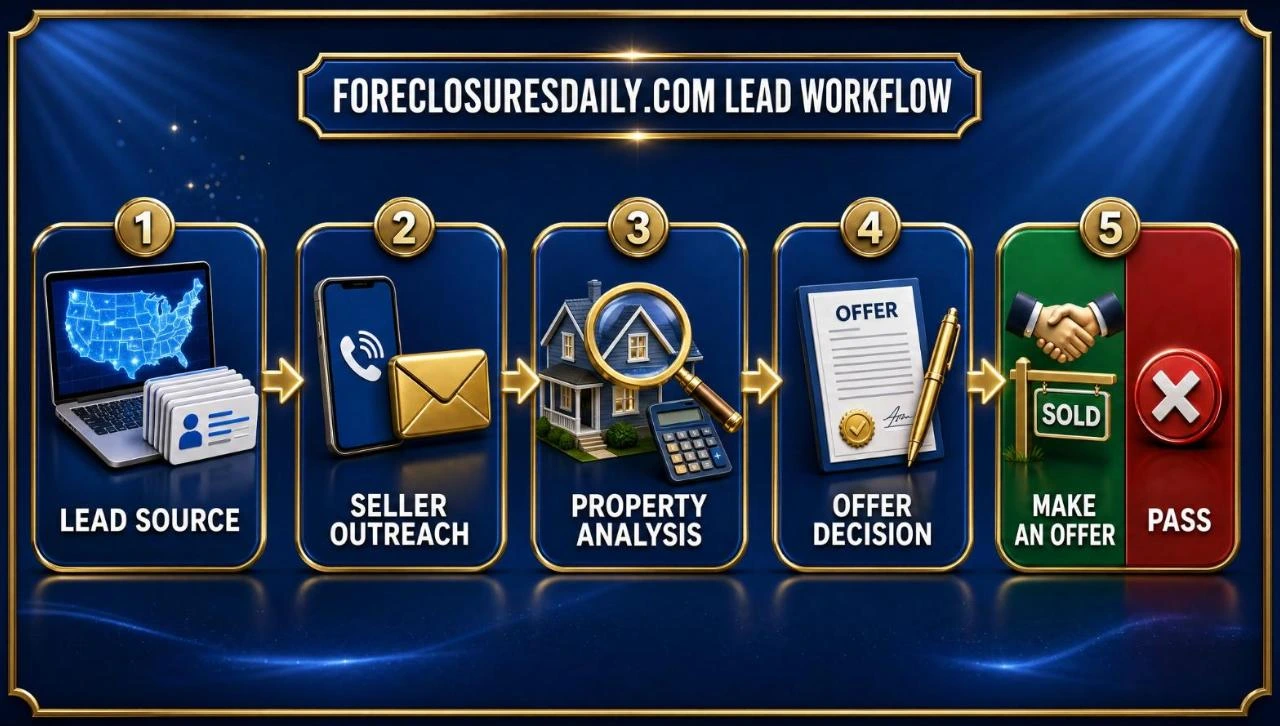
Motivated sellers eager to liquidate quickly
That’s why the off-market real estate platform at ForeclosuresDaily.com covers every major distress signal nationwide and matches each one against tax rolls and property appraiser records.




How to calculate rental income and return
Every rental property investment lives or dies on its numbers.

Start with realistic rent, then subtract every expense: mortgage, property taxes, insurance, maintenance, vacancy, management, HOA fees and capital reserves for big items like roofs. What remains is cash flow. Divide annual cash flow by the cash you invested to estimate your cash-on-cash return.
Return = Annual cash flow ÷ Cash invested
Cash invested includes the down payment, closing costs and upfront repairs.
Buying below retail lowers the mortgage and raises the return.
Stress-test the rent

Check what the rental still earns if rent is 5 to 10 percent lower or vacancy runs longer than planned. Good deals survive conservative assumptions.
Count all returns

Beyond cash flow, rentals build wealth through loan paydown, appreciation and tax benefits. Each adds to your total return over time.
Benefits of investor rental income
A well-bought rental property investment pays you in several ways at once.

Rental property remains one of the most popular wealth-building strategies for good reasons.
Monthly income

Rent can supplement your paycheck now and support financial independence over time.
Appreciation

Real estate has historically tended to rise in value over the long term, despite periodic downturns.
Tax advantages

Deductions for mortgage interest, property taxes, operating expenses and depreciation can reduce taxable rental income. Ask a tax professional.
Leverage
Borrowing lets you control a larger asset with less cash, which can amplify returns, and risk.
Diversification

Real estate often behaves differently from stocks and bonds, which can balance a portfolio.
Control
You decide on management, renovations and rents, so you can actively improve results.
Leverage cuts both ways. Keep reserves and a solid repayment plan so a vacancy or repair does not become a crisis.
Buying rentals below retail with off-market leads
The best rental property investment is often one you buy below retail.

The easiest way to improve rental returns is to pay less for the property. Off-market sellers, such as heirs, tired landlords and owners facing financial stress, often value a quick, as-is sale more than top dollar, which can leave room for better cash flow.
Tired landlords
Owners dealing with difficult tenants, evictions or distant properties may be ready to sell a rental, sometimes with tenants in place.
Estates and inherited homes
Heirs who live far away often prefer to sell rather than manage a rental, especially if the home needs updates.
- 1Absentee ownersLandlords who live elsewhere
- 2Eviction filingsOwners tired of tenant issues
- 3Probate estatesHeirs selling inherited homes
- 4PreforeclosuresOwners facing a deadline
- 5Driving for dollarsVacant, neglected homes
- 6Investor networksRentals sold between investors
What makes a strong rental purchase
Look for properties that combine:

Plan for management. Decide early whether you will self-manage or hire a property manager, and include the cost either way. Good management protects both income and property value.
ForeclosuresDaily.com hosts monthly webinars where investors such as Phillip Warrick and Nancy Wallace-Laabs share rental and short-term rental strategies.
How to start your rental property investment
Set goals and budget
Decide how much income you want, how much cash you can invest and how hands-on you will be.
Research and analyze
Study rents, vacancies and prices in your target area, then analyze each property with conservative numbers.
Buy, rent and manage
Buy below retail when you can, make needed repairs, screen tenants carefully and keep reserves for repairs and vacancies.
Before you buy your first rental
Find rentals before they reach the market with absentee owner leads and eviction leads.
ForeclosuresDaily off-market opportunities before your competition
Since 2004, ForeclosuresDaily.com has helped investors, wholesalers, flippers, and agents get to motivated sellers first.
Rental property investment FAQ
Is rental property a good investment?
It can be when rent covers all costs with room to spare and the property is bought at a good price in a stable market.
How do I calculate rental return?
Subtract all expenses from rent to find cash flow, then divide annual cash flow by the cash you invested for cash-on-cash return.
Is rental income truly passive?
Not entirely. It becomes lower-maintenance with good systems or a property manager, but it still needs oversight.
What tax benefits do rentals offer?
Deductions for mortgage interest, taxes, expenses and depreciation may apply. Consult a tax professional.
Should I start with single-family or multifamily?
Many beginners start with single-family homes or small multifamily properties because they are easier to finance and manage.
 How do I find rentals below market?
Off-market sources such as absentee owners, eviction filings, probate estates and preforeclosures.
Build rental income with better buys
Rental property investment rewards investors who choose the right property type, run conservative numbers, plan for management and buy at a good price. Those fundamentals turn a single rental into a growing source of income.