Skip tracing real estate: how to find property owners and reach them the right way
Finding the owner is the first step in almost every off-market deal.
Skip tracing turns a property address or a tax bill into a current phone number, email, or mailing address for the person who can actually sell. This guide covers where the data comes from, what it costs, the rules for calls and texts, and how foreclosure rules differ by state.























Hear From Our Customers
Click a profile to watch their video or read their story.





What is skip tracing in real estate?
Skip tracing is the process of finding current contact details for someone who is hard to reach. In real estate, it links a property and its owner of record to a phone number, email or mailing address so you can make contact.

The term comes from collections, where a person who moved without a forwarding address had “skipped.”
Property records show who owns a home, but often list an old mailing address, a trust, an LLC or an owner who has died.
A skip trace matches that owner to newer public and commercial records, then returns likely phones, emails and addresses.
Results are matches, not guarantees, so good investors verify before they rely on them.
Call every number blindly
Verify the owner first
What people search for about skip tracing
What is skip tracing draws about 2,900, which shows how many people are still learning how it works.
Buying services
Real estate focus
- 1Skip tracingAbout 9,900
- 2How to find out who owns a propertyAbout 9,900
- 3What is skip tracingAbout 2,900
- 4Skip tracing servicesAbout 1,300
- 5Skip tracing softwareAbout 720
- 6Free skip tracingAbout 590
- 7Skip tracing real estateAbout 390
- 8Real estate skip tracingAbout 260
Who investors skip trace most often
Lead types where finding the owner is the hard part:

Heirs of probate homes
Pre-foreclosure owners
Absentee landlords
Owners of vacant homes
Tax-delinquent owners
Divorcing owners
Search volumes are approximate.Treat them as a sign of how many people care about the topic rather than a precise tally.
ForeclosuresDaily.com hosts monthly webinars with investors such as Carolynn Castillo, who share how they find owners and evaluate deals.
Where real estate skip tracing data comes from and the rules that apply
This is a general overview, not legal advice. Contact and data rules change and vary by state. Consult an attorney about your outreach plan.
Public and commercial records
Skip tracing tools combine county property and tax records, court filings such as probate, divorce and foreclosure cases, address-change and utility data, phone directories and online profiles. Each source has gaps, so results vary.

Do-not-call and consent
Telemarketing calls to numbers on the National Do Not Call Registry are generally not allowed, and sellers who call must check the registry at least every 31 days. Autodialed or prerecorded calls and many marketing texts to cell phones need prior consent, and several states add their own rules.
Restricted data
Some records, such as driver’s license data and consumer credit files, are restricted by federal law and can be used only for allowed purposes. Reputable skip tracing vendors explain what data they use and how.

Reach out with respect

Many owners you find through skip tracing are grieving, behind on payments or dealing with a divorce. Introduce yourself honestly, explain why you are calling, accept a no and remove anyone who asks not to be contacted.
Honest first contactOpt-outs
Respect builds trust and referrals.
Questions to confirm on the first call
- 1Am I speaking with the owner or a family member?
- 2Is this still your property?
- 3Who else is on the title?
- 4Are you open to an offer or just exploring?
- 5What is the best way to reach you?
- 6May I follow up later?
Skip tracing by state and city
Foreclosure and probate rules, timelines and records differ across the country.
Judicial states such as New York, Maryland and Louisiana run foreclosures through the courts, so court filings give early leads. Non-judicial states such as California, Georgia and Alabama use trustee sales, often with notices published before the sale. Choose your market below.
Northeast and Mid-Atlantic
Southeast
Midwest

Texas and the Southwest

The West

City guides

Austin, TX, Chicago, IL, Dallas, TX, Denver, CO, Detroit, MI, Houston, TX, Indianapolis, IN, Las Vegas, NV, Los Angeles, CA, Orange County, CA, Phoenix, AZ, Sacramento, CA, San Diego, CA, San Francisco, CA, Seattle, WA, St. Louis, MO
Redemption periods, notice rules and probate timelines vary by state, so check the rules in your market before you make an offer.
What skip tracing in real estate costs and what it returns
Know your numbers before you skip trace a big list. Many services charge per record, often from a few cents to a few dollars depending on the data and volume, while some software includes skip tracing in a monthly plan.
The figures below are only an example.

Cost = Records traced × price per record ÷ Records with a working contact
All figures are illustrative. Real hit rates depend on the list, the data and how fresh it is.
| Example | Amount |
|---|---|
| Records traced | 500 |
| × $0.15 per record (example) | $75 |
| Records with a working phone (example 60%) | 300 |
| Cost per working contact | $0.25 |
| Conversations needed for one deal varies | Track it |

Clean the list first. Remove duplicates, owners you already reached and properties that already sold, so you pay only for records that matter.
Compare hit rates

Scrub before you dial

Track every result

Refresh old lists

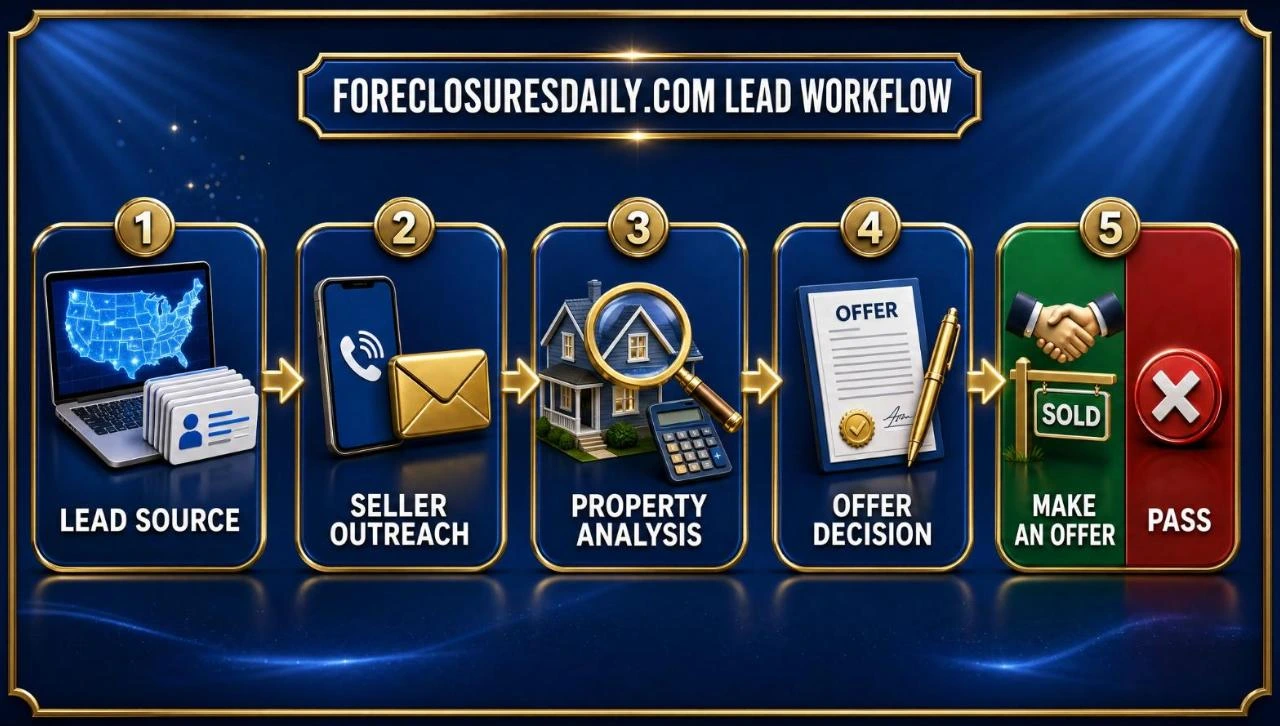
A three-step skip tracing plan
- 1
Start with a good lead list
Pull probate, pre-foreclosure, absentee owner, vacant and tax-delinquent records in your market, and confirm the owner of record.
- Lead lists
- Owner of record
- 2
Skip trace and verify
Run the list through a skip tracing service, then verify the best matches using age, relatives, past addresses and property history.
- Skip trace
- Verify
- 3
Reach out the right way
Scrub numbers against do-not-call lists, follow consent rules for texts and autodialed calls, mail letters to every good address and log every contact.
- Do-not-call
- Direct mail
Before you contact an owner
Checklist

See also probate leads, pre-probate leads and divorce leads. For calling rules, review the National Do Not Call Registry.
Find owners and start better conversations
Skip tracing turns a list of addresses into real people you can help. Investors and agents who start with strong lead lists, verify their data, follow call and text rules and reach out with respect build lasting businesses.
ForeclosuresDaily.com supplies probate, eviction, preforeclosure and absentee owner leads across the country. Explore our lead products.
Skip tracing real estate: FAQ
 What is skip tracing?
Finding current contact details for a person who is hard to reach, such as a property owner.
Is skip tracing property owners legal?
Generally yes, when you use lawful data sources and follow contact rules.
How do I find out who owns a property?
Start with the county property appraiser, assessor or recorder records for that address.
 Can I text property owners?
Only within federal and state rules. Many marketing texts need prior consent.
 How much does skip tracing cost?
Often a few cents to a few dollars per record, depending on the service and volume.
 Is free skip tracing reliable?
Free searches can help, but paid data is usually more complete. Always verify.
Related guides: Tampa Homes for Sale: 11 Tips for Comparing Tampa Real Estate, Off-Market Property Tarrant County: Fort Worth and Arlington Deals Before They List, The Art of Negotiating With Absentee Homeowners: A Practical Guide, ForeclosuresDaily.com customer reviews.