Florida Foreclosures: Court Steps, Long Timelines and Early Notices
Florida handles foreclosures through the courts, which gives owners more time and gives buyers a clear early signal. This guide explains each step of a Florida foreclosure, typical timelines, and how to find Florida foreclosure leads.






















Hear From Our Customers
Click a profile to watch their video or read their story.





What people search for
How a Florida foreclosure works
- Missed payments. The lender sends notices and a breach letter.
- Lawsuit and notice. The lender files a foreclosure case and records a lis pendens with the county.
- Response and judgment. The owner can respond. If the lender wins, the court enters a final judgment and sets a sale date.
- Public sale. The clerk holds a public auction, often online.
- After the sale. A certificate of title is issued to the winning bidder, subject to any objections.
How long Florida foreclosures take

Finding foreclosure leads in Florida
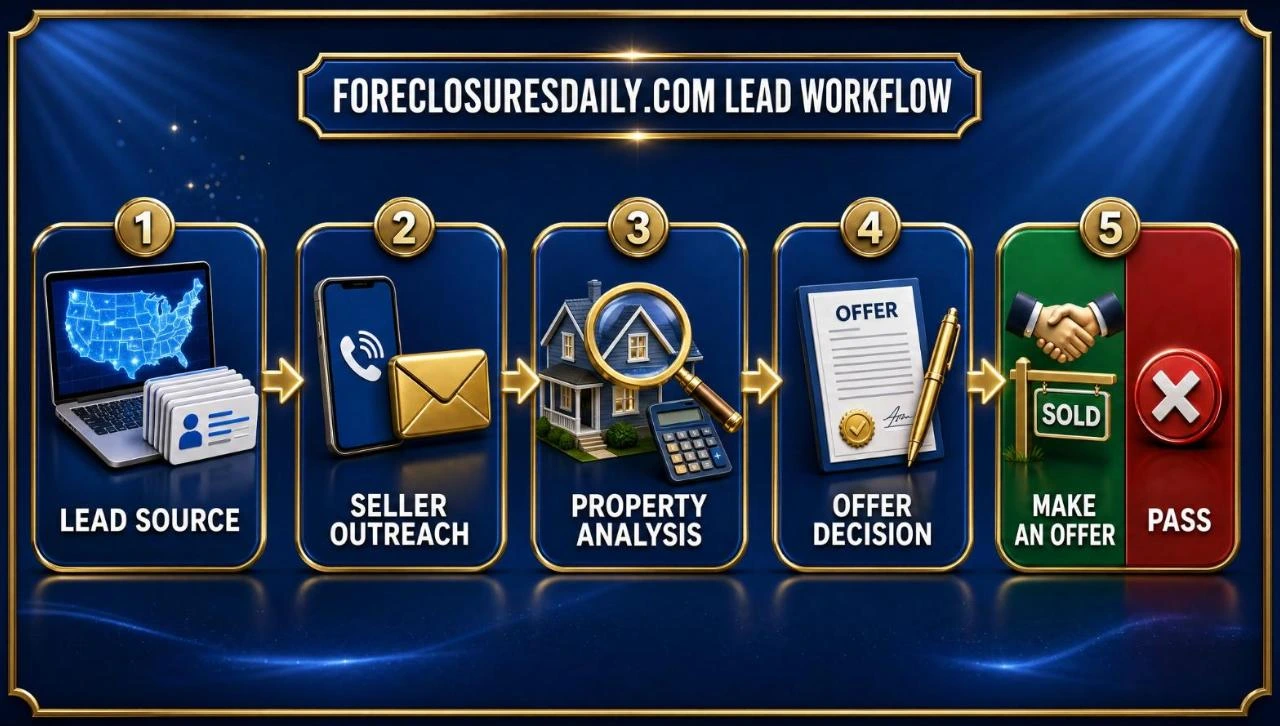
Early court notices are the best signal. Foreclosure leads organize these filings by county, so you can reach owners months before the sale. See also our Florida probate leads and Florida realtor leads.

Florida foreclosures: FAQ
Do Florida lenders have to go through court to foreclose?
 Can a Florida homeowner sell during foreclosure?
 Where are Florida foreclosure auctions held?
This Florida foreclosure guide offers general information, not legal advice. Procedures and deadlines can change, and every case is different, so consult a Florida attorney about your own situation.
Start getting Florida foreclosure leads
Get new off-market seller leads, updated daily, for the counties you work.